10 Best Snyk Alternatives in 2026: Better Coverage, Lower Cost
In 2026, the main challenge isn’t just finding bugs anymore. The real issue is how quickly attackers exploit them. Security teams once had weeks to patch vulnerabilities, but now that time has almost disappeared.
By early 2026, cybercriminals will use automated tools to find and exploit vulnerabilities faster than ever. If your security still depends on people manually researching and writing every patch, you’re already behind.
This guide reviews the best Snyk alternatives for 2026 that prioritize Supply Chain Integrity and AI-Powered Remediation to counter the rise of automated 0-day exploitation.
The 2026 Reality: By the Numbers
Recent industry data from the past year shows that it’s no longer a question of if you’ll face an attack, but when.
- Vulnerability Volume Crisis: A new vulnerability is identified every 15 minutes. By 2026, security teams will face an average of over 131 new CVE disclosures every single day.
- The 24-Hour Collapse: Roughly 28.3% of observed exploits are now launched within 24 hours of disclosure. Periodic scanning is now obsolete.
- The Rise of AI Code: AI tools now write 41% of all enterprise code. With over 256 billion lines of AI code produced annually, the volume of code needing review has outpaced human capacity.
- The $10M Threshold: The average cost of a data breach in the United States surged to an all-time high of $10.22 million in 2025 due to rising detection and recovery costs.
At a Glance: Top 10 Snyk Alternatives for 2026
| Platform | Best For | Core Differentiator | 2026 Innovation |
|---|---|---|---|
| Plexicus | Rapid Remediation | Codex Remedium AI Autofix | Click-to-Fix PR Generation |
| Cycode | SDLC Integrity | Hardened Supply Chain Security | Code Tampering Prevention |
| Sysdig Secure | Runtime Protection | eBPF-based Active Blocking | Zero-Day Exploit Killing |
| Aikido | Noise Reduction | Reachability-only Triage | 90% Alert Suppression |
| Chainguard | Secure Foundations | Hardened Minimal Images | Vulnerability-free Base Images |
| Endor Labs | Dependency Health | Lifecycle Risk Management | Predictive Dependency Intel |
| Jit | Tool Orchestration | MVS (Minimum Viable Security) | Unified DevSecOps Stack |
| Apiiro | Risk Graphing | Contextual Risk Scoring | Toxic Combination Analysis |
| Aqua Security | Cloud-Native | Image Assurance & Signing | Software Supply Chain Guard |
| Mend | Enterprise SCA | Large-scale License Governance | AI-Driven Exploitability |
1. Plexicus
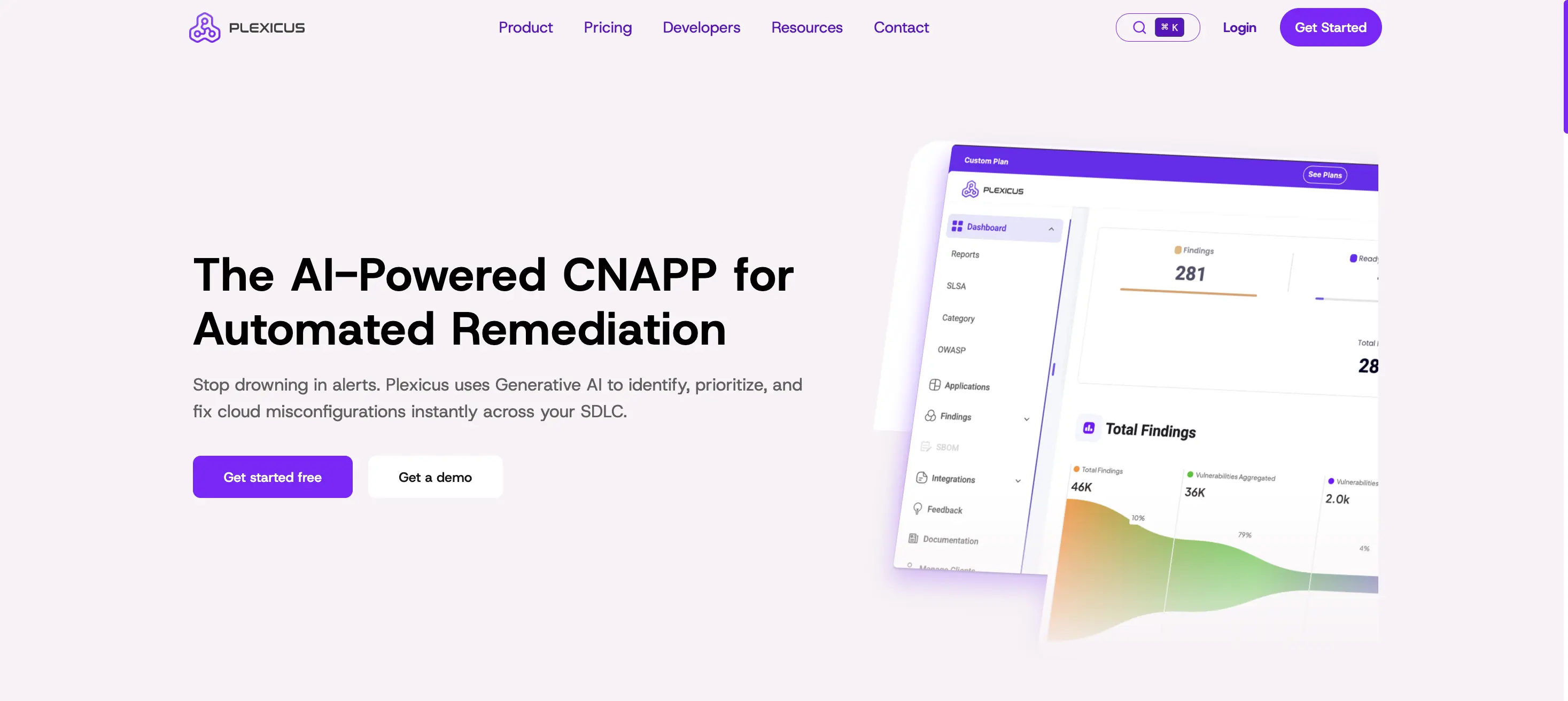
Plexicus addresses the Time to Exploit gap by replacing manual code-writing with Human-Triggered AI Remediation. In legacy workflows, a developer must research and write code manually; Plexicus automates the “writing” part so you focus on “approving.”
- Key Features: Codex Remedium is an AI-powered engine that analyzes identified vulnerabilities. When triggered, it generates a functional code patch, pull request, and unit tests specifically tailored to your codebase.
- Core Differentiator: While other tools suggest fixes, Plexicus orchestrates the entire remediation workflow. It creates the PR for you, reducing research time from hours to seconds of review.
- Pros: Reduces Mean Time to Remediate (MTTR) by up to 95%; empowers developers to fix security issues without deep AppSec training.
- Cons: Full “Auto-Merge” is restricted for production safety; production still requires a final human gatekeeper.
How to use Plexicus for AI Remediation:
- Select Finding: Open the findings menu and navigate to a critical vulnerability.
- Finding detail: Click the view finding to access the finding detail page.
- AI remediation: Click the AI Remediation button next to the finding.
- Review Fix: Codex Remedium generates a secure code diff and unit tests.
- Submit PR: Review the AI-generated diff and click Submit Pull Request to send the fix to your SCM for final approval.
2. Cycode
Cycode focuses on the connective tissue of your development life cycle, specializing in protecting the “integrity” of the process itself.
- Key Features: Identifies hard-coded secrets, monitors for Code Tampering, and ensures commit integrity (verifying who is actually committing code).
- Core Differentiator: It is a complete ASPM platform that consolidates native scanners with third-party tools to secure the entire software supply chain.
- Pros: Best-in-class for preventing SolarWinds-style compromises; provides massive visibility across the full SDLC.
- Cons: Can be complex to set up for smaller teams with simpler CI/CD pipelines.
3. Sysdig Secure
If you cannot patch fast enough, you must be able to block. Sysdig focuses on the runtime safety net.
- Key Features: Uses eBPF-based insights to detect and kill malicious processes (like unauthorized shells) in real time.
- Core Differentiator: Bridges the gap between development and production by correlating in-use vulnerabilities with live telemetry.
- Pros: The only true defense against unpatched 0-day vulnerabilities in production; proactive support acts as an extension of your team.
- Cons: Requires agent deployment in Kubernetes clusters; pricing can be prohibitive for organizations with fewer than 200 nodes.
4. Aikido Security
Aikido solves the “Vulnerability Flood” by focusing on Reachability. It recognizes that a bug in an unused library is not a priority.
- Key Features: Unified dashboard for SAST, SCA, IaC, and Secrets; enhanced with reachability analysis.
- Core Differentiator: Extreme focus on noise reduction and simplicity; setup typically takes less than 10 minutes.
- Pros: Drastically lower false-positive rates; transparent and fair pricing model compared to enterprise giants.
- Cons: DAST (Dynamic Scanning) features are still maturing compared to specialized tools.
5. Chainguard
Chainguard focuses on Secure by Default infrastructure. They believe the best way to fix a vulnerability is to never have it in the first place.
- Key Features: Provides “Wolfi” hardened minimal container images and curated package repositories.
- Core Differentiator: Offers a strict CVE remediation SLA (Patched within 7 days for Criticals) for their images.
- Pros: Effectively vacuums the attack surface before developers even start; hybrid CIS + STIG hardening baselines.
- Cons: Requires teams to migrate away from standard (bloated) OS images to a minimal footprint.
6. Endor Labs
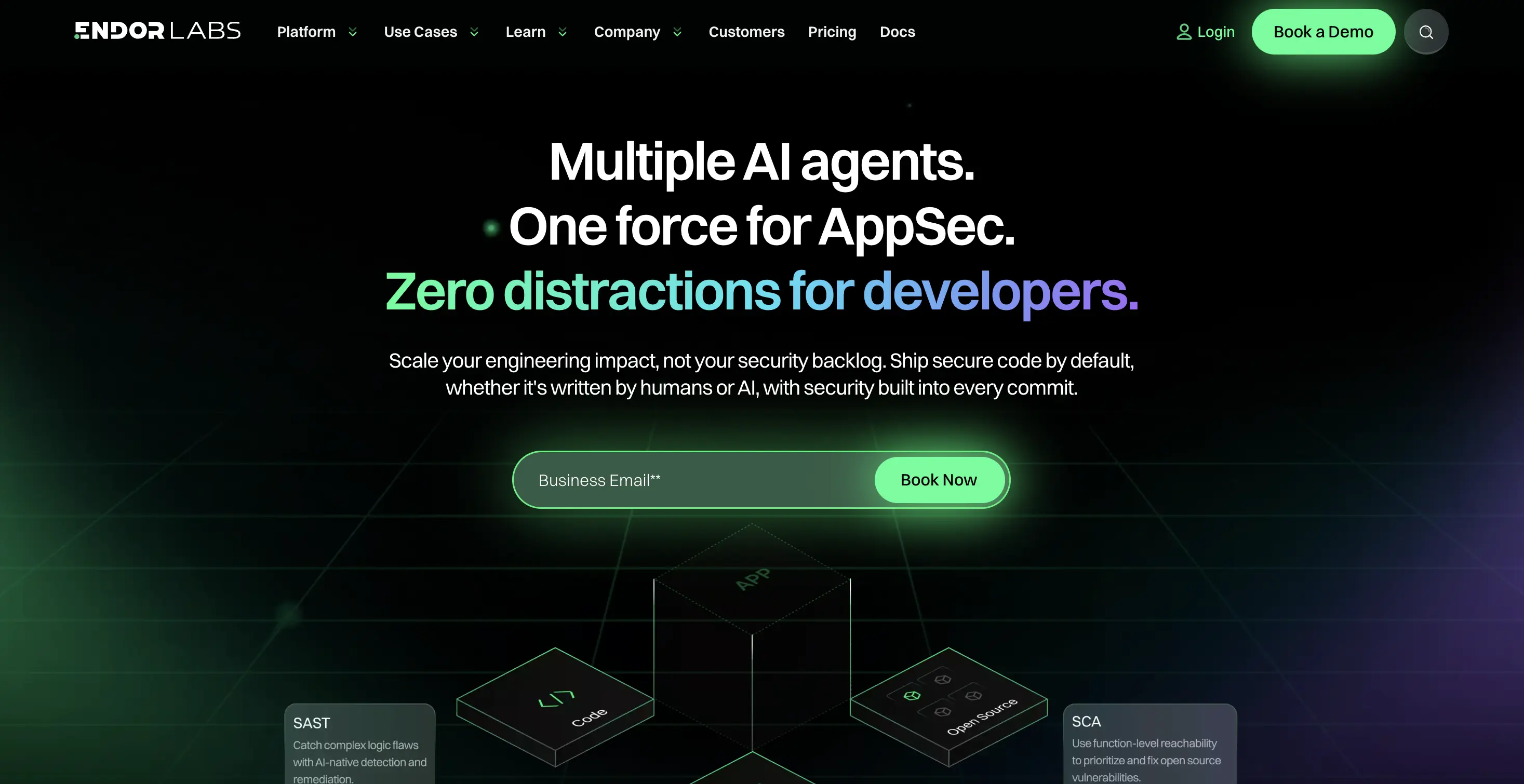
Endor Labs focuses on Dependency Lifecycle Management by looking at the health of the open-source projects you use.
- Key Features: Build call graphs of your entire software estate, detect malicious packages, and perform predictive health checks.
- Core Differentiator: Unique knowledge base of 4.5M projects with 1B risk factors to understand exactly how functions work.
- Pros: Predictive risk management prevents technical debt; “Upgrade Impact Analysis” shows exactly what will break before you patch.
- Cons: Primarily focused on open-source dependencies; less emphasis on custom code logic (SAST) than specialists.
7. Jit
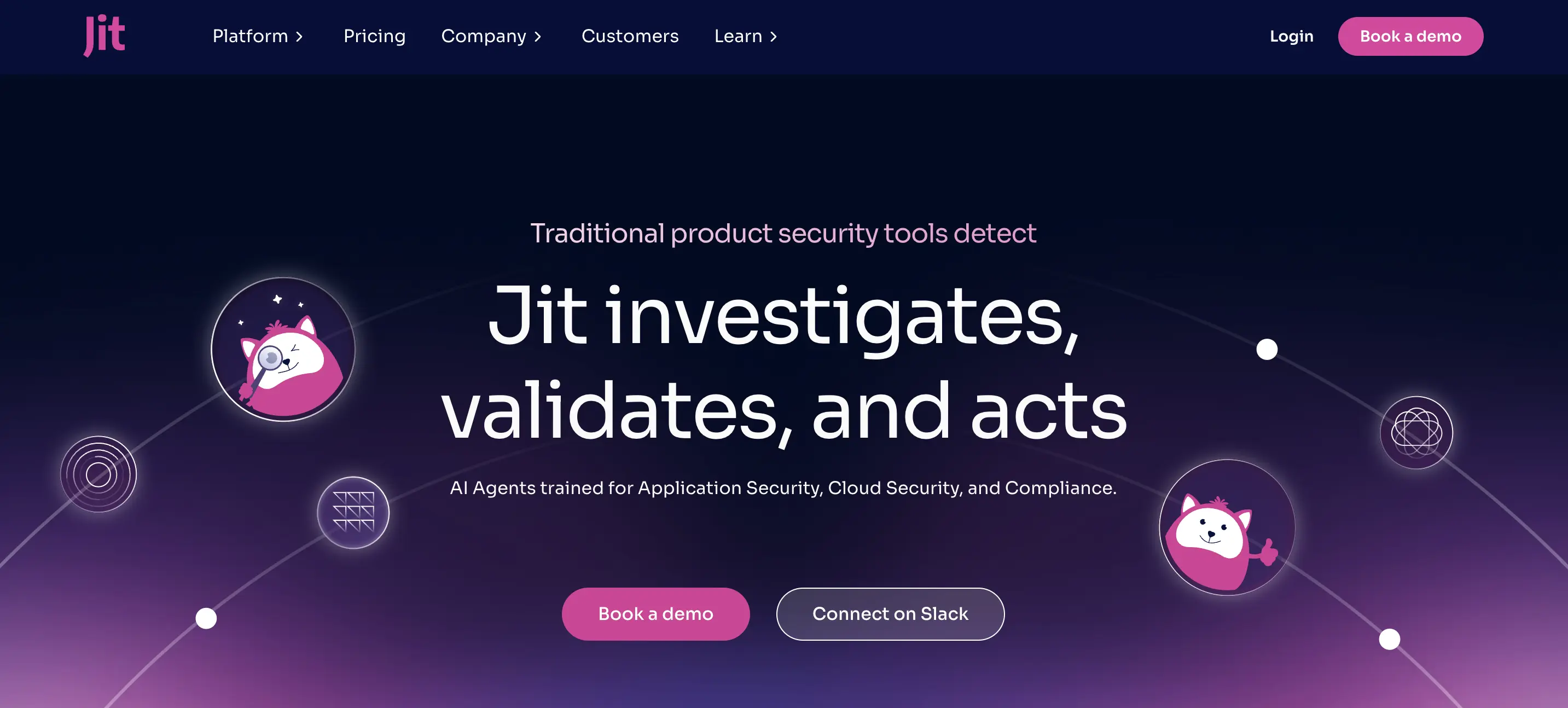
Jit is the orchestration layer for teams that want to avoid “Tool Sprawl” and high Snyk licensing costs.
- Key Features: One-click deployment of a full security stack (SAST, SCA, Secrets, IaC) using managed open-source engines.
- Core Differentiator: Provides a “Minimum Viable Security” stack tailored exactly to your current SDLC stage.
- Pros: Highly cost-effective; eliminates administrative overhead through automated provisioning and revocation.
- Cons: Since it orchestrates other scanners, you may hit the feature limitations of the underlying tools.
8. Apiiro
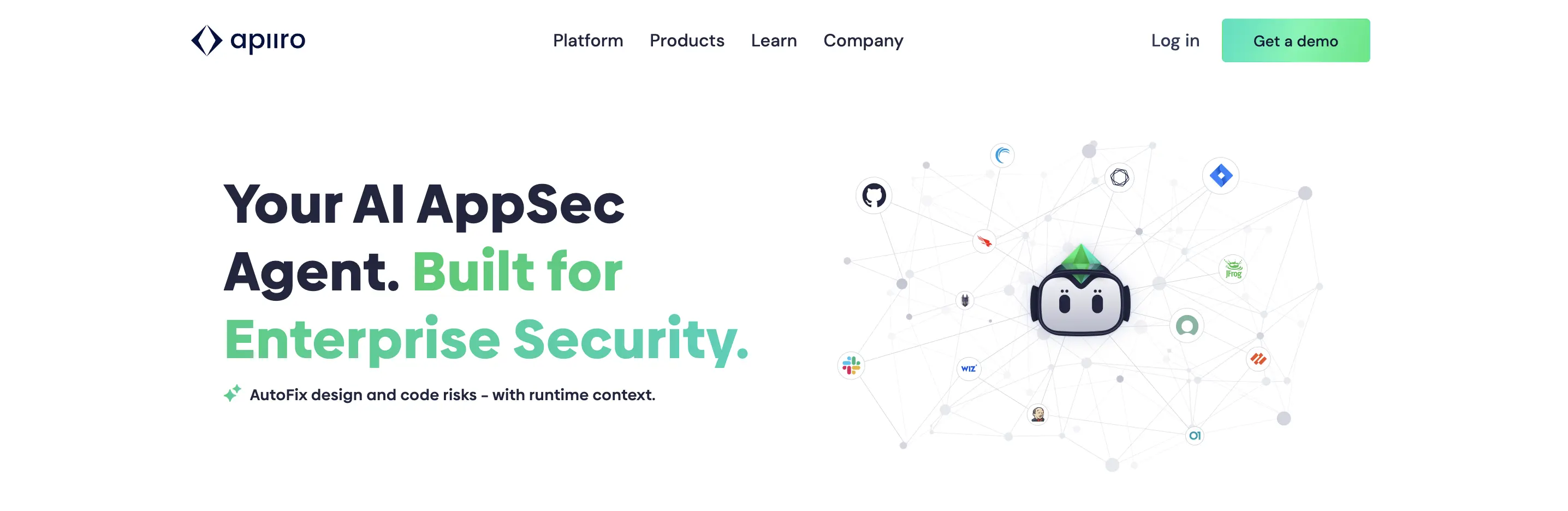
Apiiro provides Application Risk Management by building a deep foundational inventory of your applications.
- Key Features: Extended SBOM (XBOM), material code change detection, and deep code analysis.
- Core Differentiator: The Risk Graph engine identifies “Toxic Combinations”—e.g., a vulnerable library in a public-facing app with excessive IAM permissions.
- Pros: Unmatched prioritization for massive enterprises; 100% open platform integrating with all major dev tools.
- Cons: Enterprise-grade pricing; can be overkill for small organizations with few repositories.
9. Aqua Security
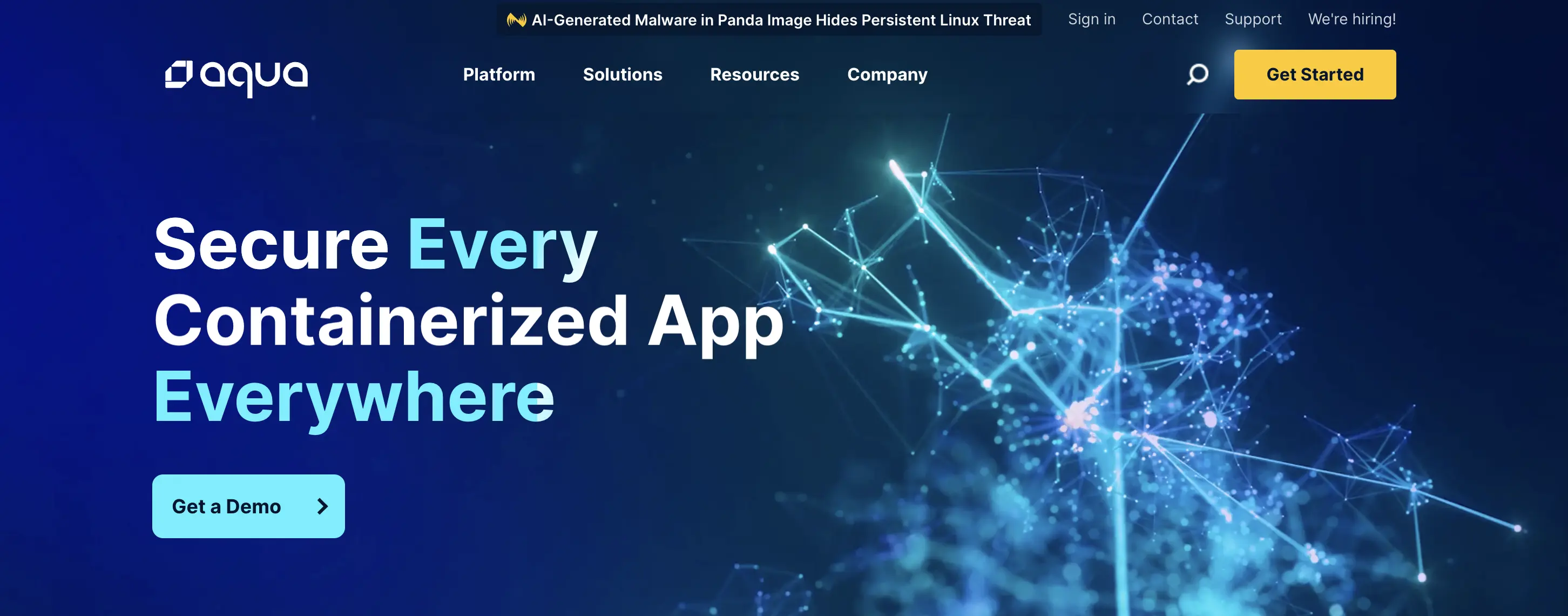
Aqua is a pioneer of Cloud-Native Security, providing a full lifecycle solution from development to production.
- Key Features: Dynamic threat analysis in sandboxes; image assurance and signing; real-time runtime protection.
- Core Differentiator: Combines the power of agent and agentless technology into a single, unified Cloud-Native Application Protection Platform (CNAPP).
- Pros: Robust container security and proactive issue detection; clear recommendations for vulnerability remediation.
- Cons: Documentation can be confusing; interface design for expanded columns and search filters could be improved.
10. Mend
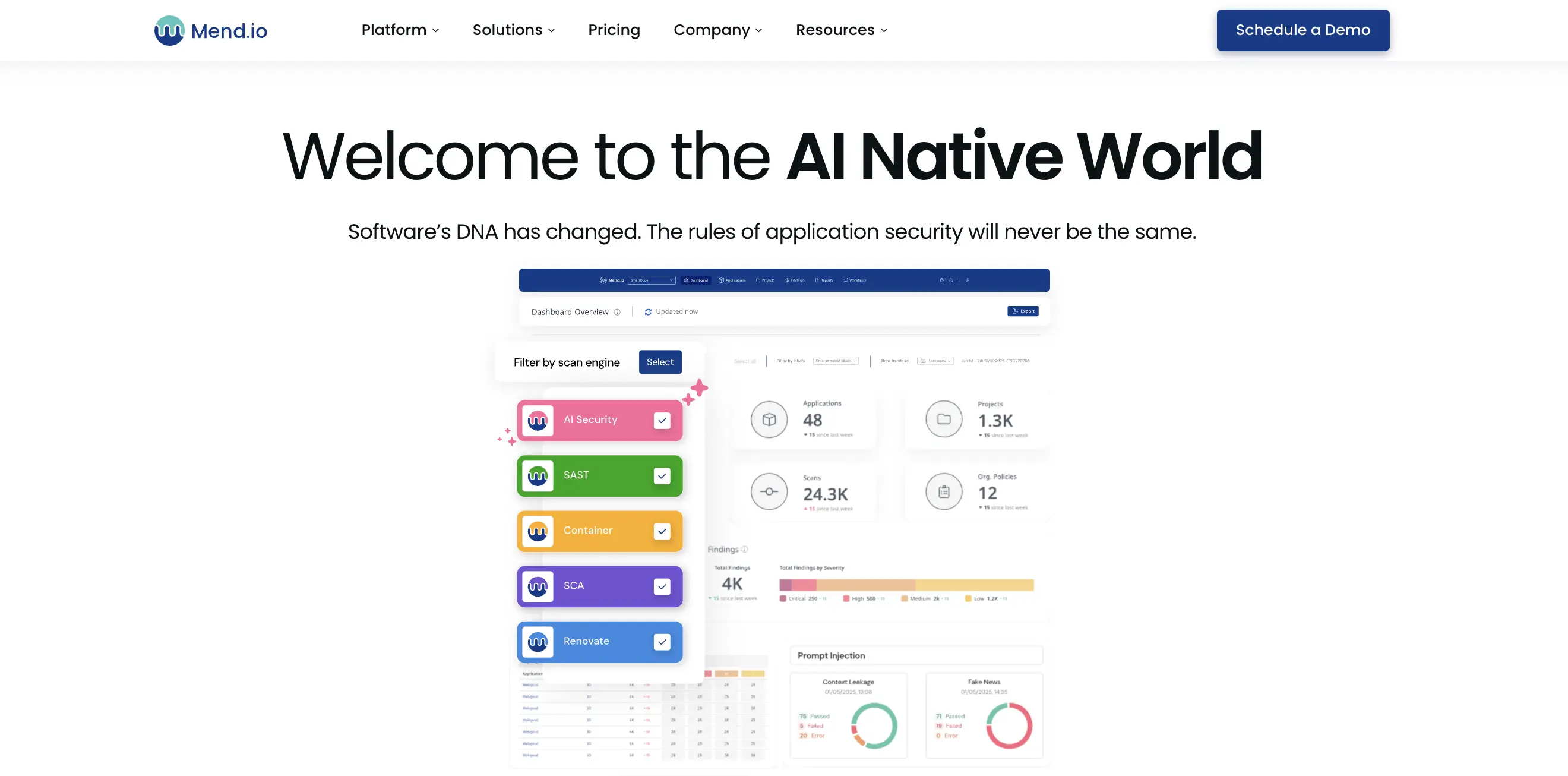
Mend (formerly WhiteSource) is the heavyweight of SCA (Software Composition Analysis) for large corporations.
- Key Features: Robust management of third-party dependencies; automated inventory management and license compliance tracking.
- Core Differentiator: Proprietary vulnerability database with deep annotations and real-time feedback for license violations.
- Pros: Excellent for managing complex open-source licenses; reduces MTTR by providing immediate remediation paths.
- Cons: Scanning containers and images could be improved, particularly in distinguishing between layers.
FAQ: The Realities of 2026 Security
Does Plexicus fix code automatically?
No. Plexicus is a human-in-the-loop tool. While it uses AI to generate the fix, a human must click the button to trigger the remediation, and a team lead must approve the resulting Pull Request. This ensures security without sacrificing engineering control.
Why is Time to Exploit the most important metric?
Because 28.3% of exploits now happen within 24 hours. If your security tool only scans once a week, you are blind for six days. You need a tool like Plexicus that allows you to generate and submit fixes the moment a threat is identified.
Can I trust AI to write security fixes?
AI-generated code should always be reviewed. Plexicus assists this by running unit tests and static analysis on its own generated fixes before showing them to you, providing a “verified” suggestion that speeds up the human review process.
Final Thought
The Software Supply Chain is the new perimeter. If you are still relying on a tool that just tells you “this library is old,” you are missing the point. You need a platform that validates integrity and accelerates the fix through AI-assisted remediation.