Top 10 CNAPP Tools for 2026 | Cloud Native Application Protection Platforms
Imagine a bustling Friday afternoon in the security operations center of a rapidly growing tech company. The team, already knee-deep in alerts, receives notification after notification, their screens flashing with ‘critical’ issues that demand immediate attention. They have over 1,000 cloud accounts spread across various providers, each one contributing to the tidal wave of alerts. Many of these alerts, however, do not even relate to internet-exposed resources, leaving the team frustrated and overwhelmed by the scale and the apparent urgency of it all. Cloud security is complicated.
To address this, many organizations are turning to Cloud-Native Application Protection Platforms (CNAPP). However, not every CNAPP is the same. Some are simply a mix of different tools combined into one product, lacking cohesive integration and unified reporting capabilities. For instance, many platforms fail to offer real-time vulnerability remediation, a crucial feature that separates more advanced solutions from basic tool collections.
This post aims to clarify things. We’ll review the top 10 CNAPP vendors for 2026, with a focus on runtime protection, attack path analysis, and practical ways to remediate vulnerabilities without requiring emergency meetings. The selection of these vendors was based on criteria such as innovation in cloud native security, ease of integration, feature comprehensiveness, and market reputation. We gathered insights from industry reports, expert reviews, and direct feedback from leading tech company security teams to ensure the relevance and reliability of our findings.
What is CNAPP?
A CNAPP is a single security platform that brings together Cloud Security Posture Management (CSPM), Cloud Workload Protection (CWPP), and Cloud Infrastructure Entitlement Management (CIEM).
Rather than checking a misconfigured S3 bucket in one tool and a vulnerable container in another, a CNAPP connects the dots. Imagine a scenario where the system detects a critical CVE in a container. Immediately, the CNAPP identifies that this container is associated with an IAM role that has admin privileges.
Within minutes, it correlates this vulnerability with potential attack pathways, offering insights into how an exploit could unfold. As soon as the threat pattern is clear, the platform auto-blocks the exploit by manipulating IAM permissions and isolating the affected container. This seamless, step-by-step process transforms a potential security breach into a managed threat.
Why CNAPP matters
The risk is simple: Complexity. According to recent engineering benchmarks, 80% of successful cloud breaches involve misconfigured identities or over-privileged roles.
If you’re still using siloed tools, you’re missing the context. You might patch 100 vulnerabilities today, but if none of them were on an internet-facing attack path, your actual risk level didn’t change. CNAPPs prioritize risk based on exploitability, not just CVSS scores.
Why Listen to Us?
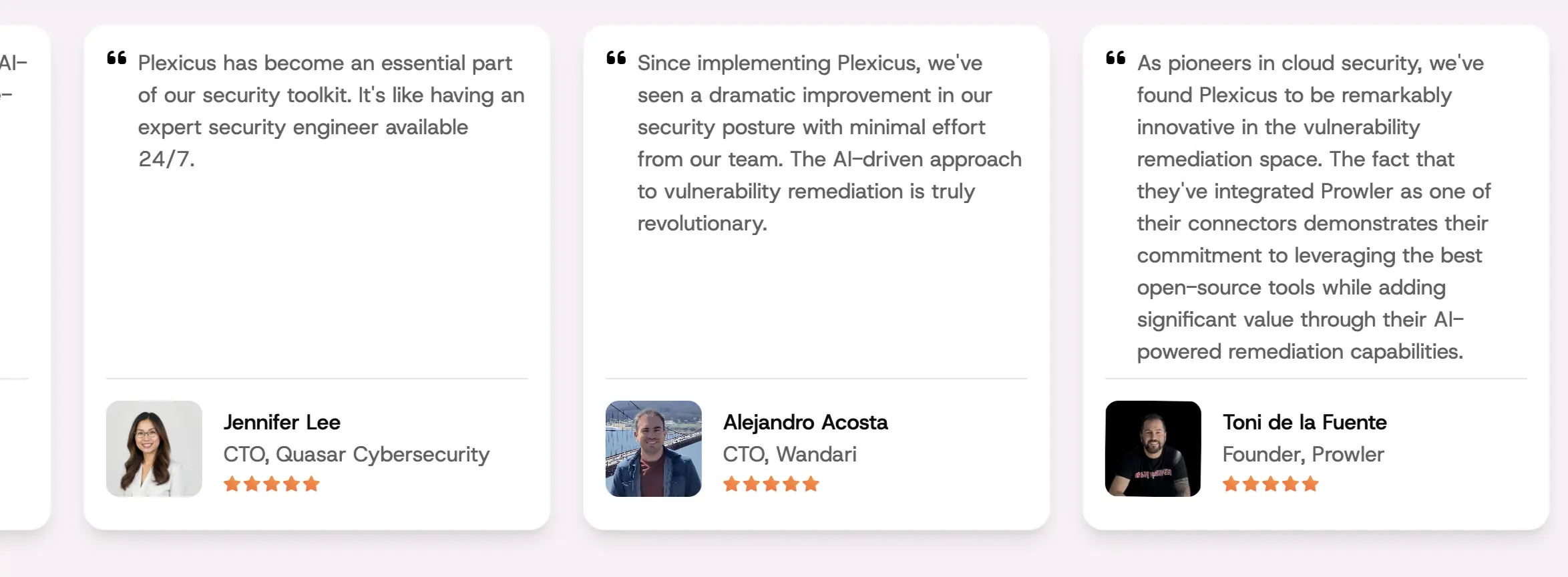
We have already helped organizations like Ironchip, Devtia, and Wandari secure their cloud-native stacks. While we are affiliated with Plexicus, our commitment to providing objective and balanced reviews remains a top priority. We understand the pain of alert fatigue because we built Plexicus to solve it. Our platform does not just flag issues. It fixes them.
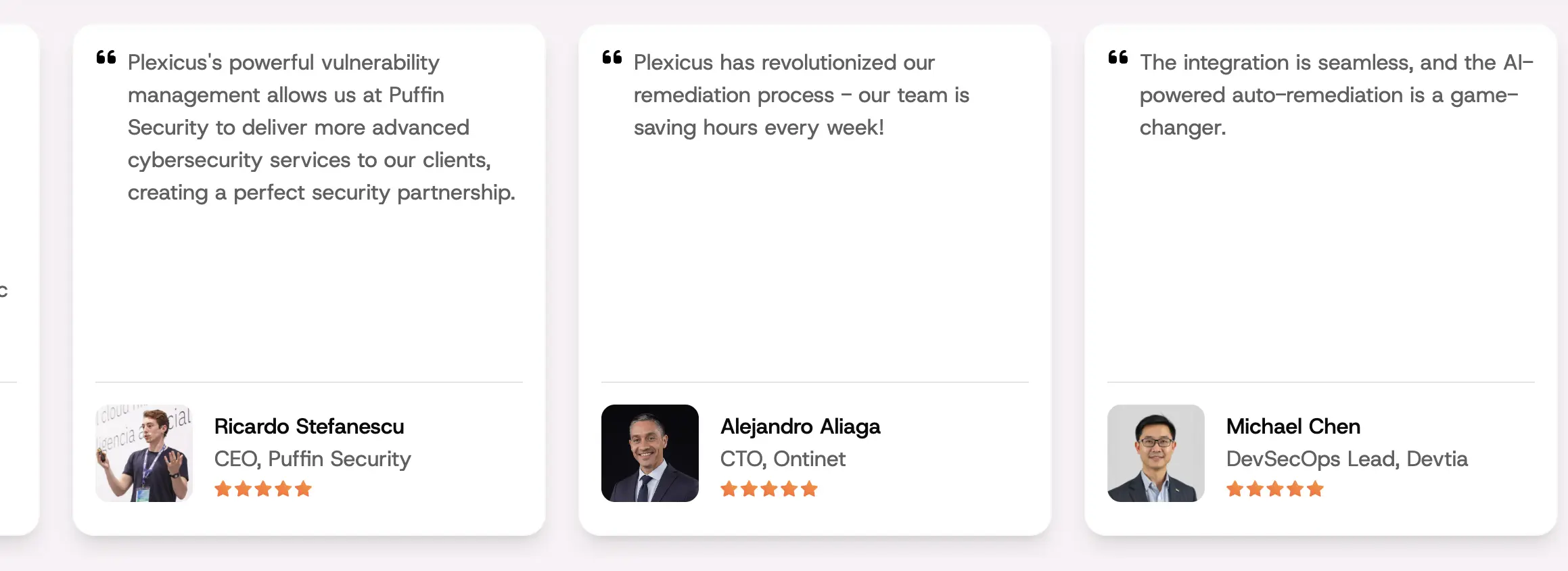
“Plexicus has revolutionized our remediation process; our team is saving hours every week!”
- Alejandro Aliaga, CTO Ontinet
We know what makes a CNAPP tool truly valuable because we are building the next generation of automated cloud security.
At a Glance: Top CNAPP Vendors 2026
| Vendor | Primary Focus | Best For | Key Differentiator |
|---|---|---|---|
| Plexicus | Automated Remediation | Agile DevOps Teams | AI-driven Auto-fix Pull Requests |
| SentinelOne | AI-Powered Runtime | SOC & IR Teams | Offensive Security Engine |
| Wiz | Agentless Visibility | Rapid Scalability | Cloud Security Graph |
| Prisma Cloud | Full Lifecycle Security | Large Enterprises | Deep IaC and CI/CD Scanning |
| MS Defender | Azure Ecosystem | Microsoft-Centric Shops | Native Azure & GitHub Integration |
| CrowdStrike | Threat Intelligence | Active Breach Prevention | Adversary-Centric Detection |
| CloudGuard | Network Security | Regulated Industries | Advanced Network Flow Analysis |
| Trend Vision One | Hybrid Cloud | Data Center Migration | Virtual Patching & ZDI Intel |
| Sysdig Secure | Kubernetes Security | K8s-Heavy Stacks | eBPF-based Runtime Insights |
| FortiCNAPP | Behavioral Analytics | Large Scale Ops | Polygraph Anomaly Mapping |
10 Best CNAPP Vendors for 2026
1. Plexicus
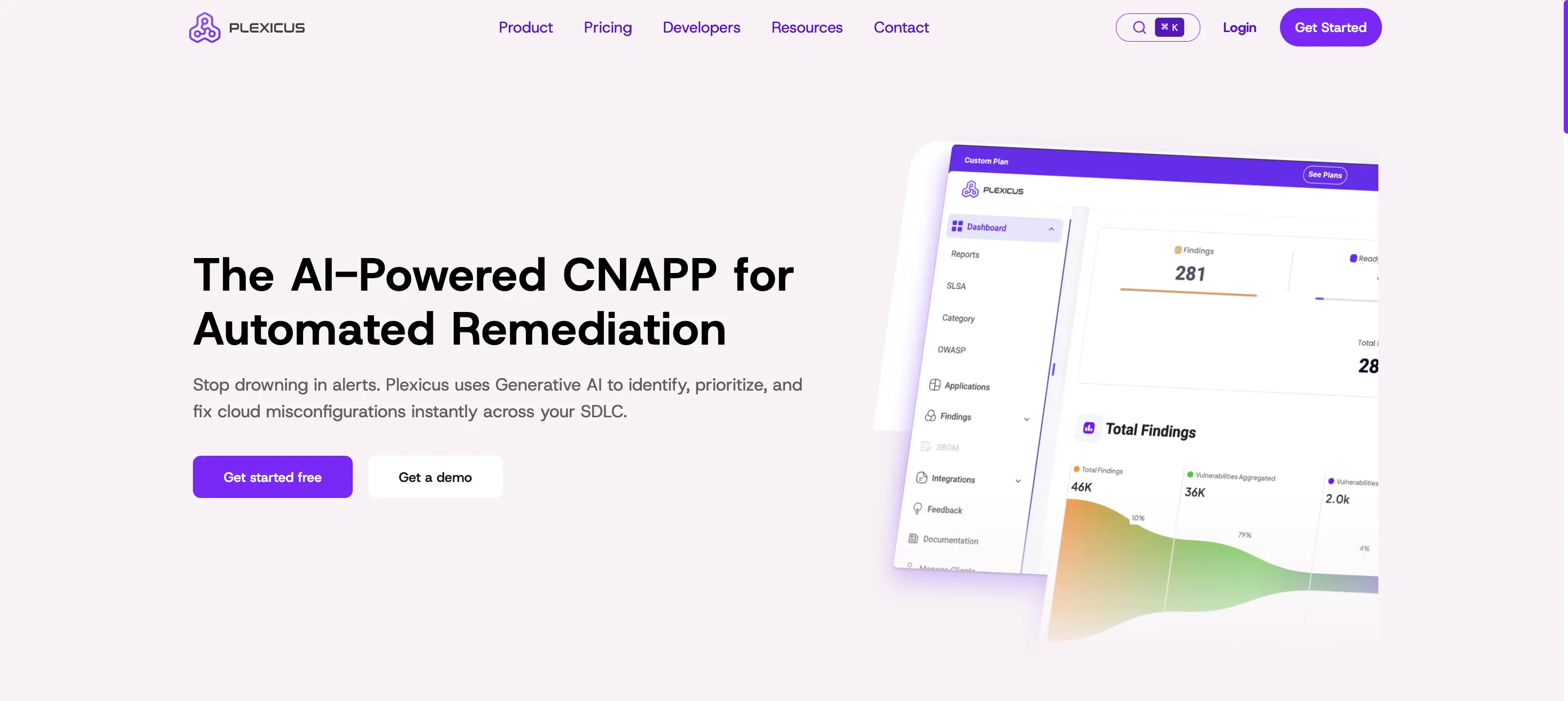
Plexicus is built for teams that prioritize automated remediation and real-time scanning over static reporting. While other tools tell you what is wrong, Plexicus focuses on stopping the leak before it spreads.
Features:
- AI-Driven Auto-Remediation: Generates code-level fixes and opens Pull Requests automatically to resolve vulnerabilities.
- ASPM Integration: Deep visibility into application-level risks, linking code owners to production cloud vulnerabilities.
- Continuous Code-to-Cloud Mapping: Correlates source code flaws with live runtime environments.
Pros:
- Drastically reduces mean time to remediate (MTTR).
- Seamless integration with GitHub, GitLab, and Bitbucket.
- Developer-first UX reduces friction between security and engineering.
Cons:
- Newer player in the market compared to legacy firewall vendors.
- Focuses heavily on modern cloud-native stacks over legacy on-prem.
2. SentinelOne (Singularity Cloud)
SentinelOne is the leader in AI-powered runtime protection. It uses an Offensive Security Engine that simulates attack paths to verify if a vulnerability is actually exploitable.
Features:
- Verified Exploit Paths: Automatically probes cloud issues to present evidence-based findings.
- Purple AI: A generative AI analyst that documents investigations in natural language.
- Binary Integrity: Real-time protection against unauthorized changes to workloads.
Pros:
- Best-in-class EDR capabilities for cloud workloads.
- High automation in threat hunting.
Cons:
- It can be complex to configure for teams without dedicated security analysts.
3. Wiz
Wiz pioneered the agentless, graph-based approach. It excels at rapid deployment across massive multi-cloud footprints.
Features:
- Cloud Security Graph: Correlates misconfigurations, vulnerabilities, and identities.
- Deep Agentless Scanning: Scans PaaS, VMs, and serverless without requiring local agents.
Pros:
- Extremely fast time-to-value.
- Industry-leading visualization of complex attack paths.
Cons:
- Limited runtime blocking compared to agent-based solutions.
4. Palo Alto Networks (Prisma Cloud)
Prisma Cloud is the most comprehensive shift-left platform. It is ideal for organizations that want deep integration into the development lifecycle.
Features:
- IaC Security: Scans Terraform and CloudFormation for violations during development.
- Advanced WAAS: Includes web application and API security.
Pros:
- Most complete feature set in the market today.
- Robust regulatory compliance reporting.
Cons:
- Often requires significant management effort due to platform size.
5. Microsoft Defender for Cloud
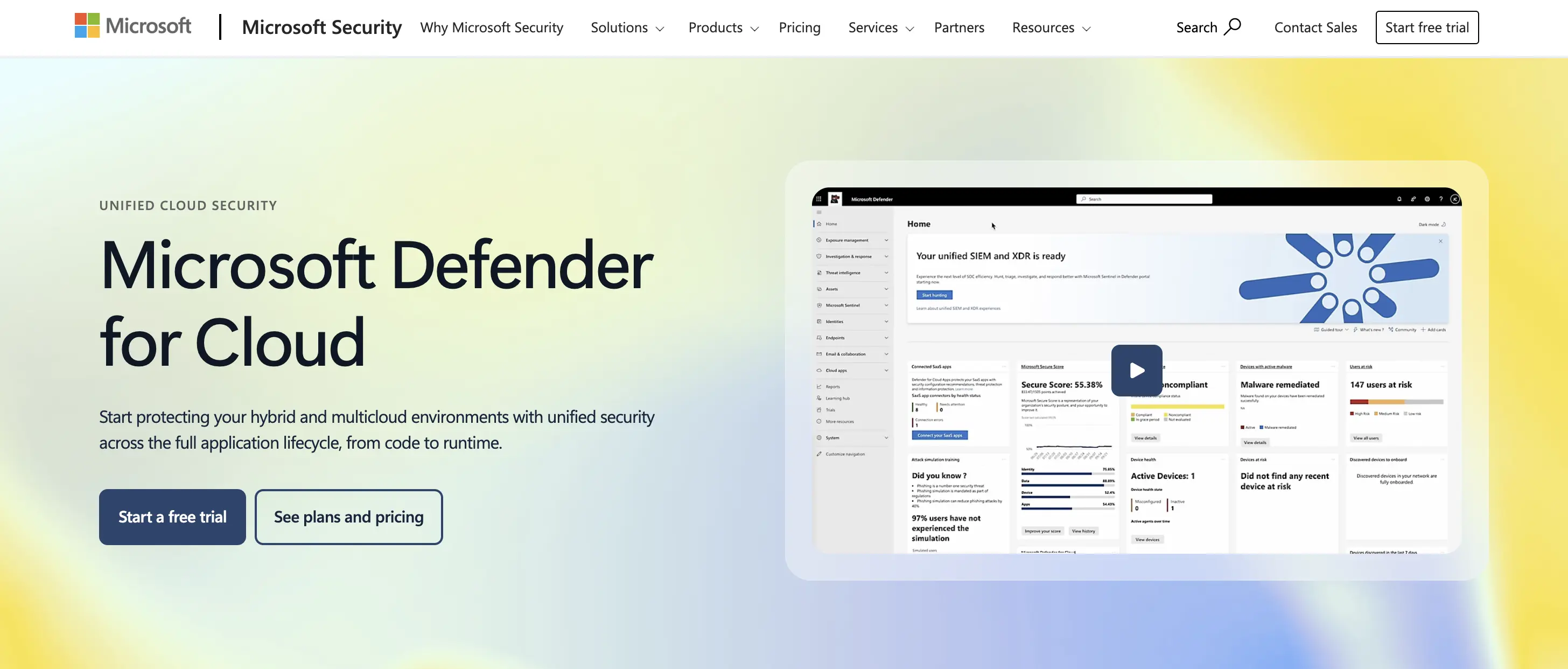
The default choice for Azure-heavy environments, offering native integration and multi-cloud extensions.
Features:
- Native Azure Integration: Deepest possible visibility into Azure resource groups.
- Just-in-Time Access: Manages attack surface by limiting VM port exposure.
Pros:
- Zero-friction deployment for Azure users.
Cons:
- Third-party cloud support (AWS/GCP) can feel less mature.
6. CrowdStrike (Falcon Cloud Security)
CrowdStrike focuses on Adversary-Centric security. It is built for SecOps teams that need to stop breaches in progress.
Features:
- Indicators of Attack (IOAs): Detects malicious behavior based on adversary tactics.
- Unified Agent: Single lightweight sensor for endpoint and cloud workload protection.
Pros:
- World-class threat intelligence integration.
Cons:
- Less focus on application source code (SAST) compared to competitors.
7. Check Point CloudGuard
A powerhouse for network security within the cloud, providing advanced threat prevention across virtual networks.
Features:
- Network Flow Analysis: Deep analysis of cloud traffic to detect lateral movement.
- Unified Console: Single view for public cloud and on-prem firewalls.
Pros:
- Strongest network security controls in the category.
Cons:
- UI can feel dated for modern DevOps-centric teams.
8. Trend Micro (Trend Vision One)
Provides a deep focus on hybrid cloud environments, bridging on-prem and cloud-native workloads.
Features:
- Virtual Patching: Protects workloads against zero-days before official patches are applied.
- ZDI Intelligence: Powered by the world’s largest bug bounty program.
Pros:
- Excellent legacy and hybrid workload support.
Cons:
- Cloud-native features can feel bolted onto an older core.
9. Sysdig (Secure)
Built on open-source Falco, Sysdig is the top choice for Kubernetes-heavy environments.
Features:
- Runtime Insights: Verifies which vulnerabilities are actually loaded and in use.
- Drift Control: Detects and blocks unauthorized changes to running containers.
Pros:
- Deepest container visibility in the industry.
Cons:
- Strong focus on K8s may leave non-containerized assets less covered.
10. Fortinet (FortiCNAPP)
Following the acquisition of Lacework, Fortinet provides a cloud-smart approach using machine learning to baseline behavior.
Features:
- Polygraph Data Platform: Automatically maps behavior to identify anomalies.
- Fortinet Fabric Integration: Connects cloud security with the broader network fabric.
Pros:
- Exceptional at finding “unknown unknowns” without manual rules.
Cons:
- Platform integration post-acquisition is still a work in progress.
Common Myths
Myth #1: Agentless is always better.
Here’s the deal: Agentless scanning is great for visibility (CSPM), but it cannot stop an active exploit in real-time. For mission-critical workloads, you still need an agent (CWPP) to provide runtime blocking.
Myth #2: CNAPP replaces your security team.
Don’t bother thinking a tool will fix a broken process. A CNAPP is a force multiplier, but you still need engineers who understand IAM policies to act on the data.
Moving Beyond Alert Fatigue
Cloud security in 2026 isn’t about finding more bugs. It’s about closing the loop between a developer’s IDE and the production environment.
If your current tool provides a massive PDF of “findings” but no path to resolution, you are effectively paying for noise. Real security happens when the tool does the heavy lifting of remediation.
Plexicus is designed to handle this by moving past detection and into automated fixing. If your team is tired of chasing unreachable CVEs, start with a platform that prioritizes exploitability.
Would you like me to walk through a specific comparison of how Plexicus handles IaC remediation versus legacy tools?
Frequently Asked Questions
How does a CNAPP differ from using separate CSPM and CWPP tools?
Standalone tools create silos. A CSPM might find a misconfigured bucket, but it won’t know if the application running on the connected VM is vulnerable. A CNAPP correlates these data points to show the actual attack path, saving your team from chasing non-exploitable risks.
Can I use a CNAPP for multi-cloud environments?
Yes. Most modern CNAPPs are designed to normalize data across AWS, Azure, and GCP. The goal is to apply a single security policy across your entire cloud footprint.
Does a CNAPP help with regulatory compliance?
Most platforms include out-of-the-box templates for SOC 2, HIPAA, PCI DSS, and GDPR. They continuously audit your environment and flag violations, making evidence collection faster.