Top 10 Fortinet CNAPP Alternatives for 2026: From Anomaly Detection to Automated Fixes
In 2024, Fortinet completed its acquisition of Lacework, merging one of the most innovative AI-driven anomaly detection platforms into the Fortinet Security Fabric. The result, FortiCNAPP, is a powerhouse for teams that need deep behavioral analytics and unified networking security.
However, as we move into 2026, many technical teams are finding that “anomaly detection” alone isn’t enough to handle the sheer volume of code being produced. With 41% of all code now AI-generated and over 256 billion lines of code produced annually, the bottleneck has shifted from “knowing something is weird” to “fixing the underlying vulnerability.”
If you are looking for a FortiCNAPP alternative that prioritizes remediation throughput and developer-centric workflows, this guide is for you.
Why Trust Us?
At Plexicus, we specialize in Remediation. We believe that a security tool’s value is measured by the number of tickets it closes, not the number of alerts it creates. Our insights are driven by the reality of industrialized exploitation, where 28.3% of exploits launch within 24 hours of disclosure. We build and review tools that help engineers move at the speed of the attacker.
At a Glance: Top 10 FortiCNAPP Alternatives for 2026
| Platform | Best For | Core Differentiator | Setup Type |
|---|---|---|---|
| Plexicus | Rapid Remediation | AI-Powered “Click-to-Fix” | Agentless (OIDC) |
| Wiz | Multi-Cloud Visibility | The Security Graph | Agentless |
| Orca Security | Data Security | SideScanning Technology | Agentless |
| Sysdig Secure | Runtime / K8s | eBPF-based Active Blocking | Agent-based |
| Prisma Cloud | Enterprise Compliance | Unified Policy-as-Code | Hybrid |
| CrowdStrike | Threat Hunting | EDR-native Cloud Security | Agent-based |
| SentinelOne | Autonomous SOC | Offensive AI Engine | Agent-based |
| Snyk | Developer Flow | Native IDE & PR Integration | Integration |
| Check Point | Network Security | Unified Cloud Firewalls | Hybrid |
| Uptycs | Asset Management | SQL-powered Unified Visibility | Agent-based |
Which Tool Should You Choose?
Not all CNAPP tools are created equal. Depending on your specific pain point with FortiCNAPP/Lacework, here is our decision framework:
- If you want to STOP researching alerts and START fixing them, choose Plexicus. It is the only tool on this list that focuses entirely on “Remediation Throughput,” automating the creation of patches and PRs rather than just flagging anomalies.
- If you need instant visibility into a messy multi-cloud environment, choose Wiz. Its “Security Graph” is unrivaled for showing you how vulnerabilities, identities, and misconfigurations overlap to create “Toxic Combinations.”
- If your priority is compliance and consolidating everything (Firewalls + Cloud): Choose Prisma Cloud. It is the heavyweight champion for 360-degree compliance, though it requires a steeper learning curve.
- If you need to block attacks in real-time on Kubernetes, choose Sysdig Secure. Unlike agentless tools, Sysdig sits at the kernel level (eBPF) and can kill malicious processes the moment they start.
- If you want to shift security entirely to the developer’s IDE, choose Snyk. It catches issues before code ever reaches the cloud, making it the most developer-friendly option.
1. Plexicus
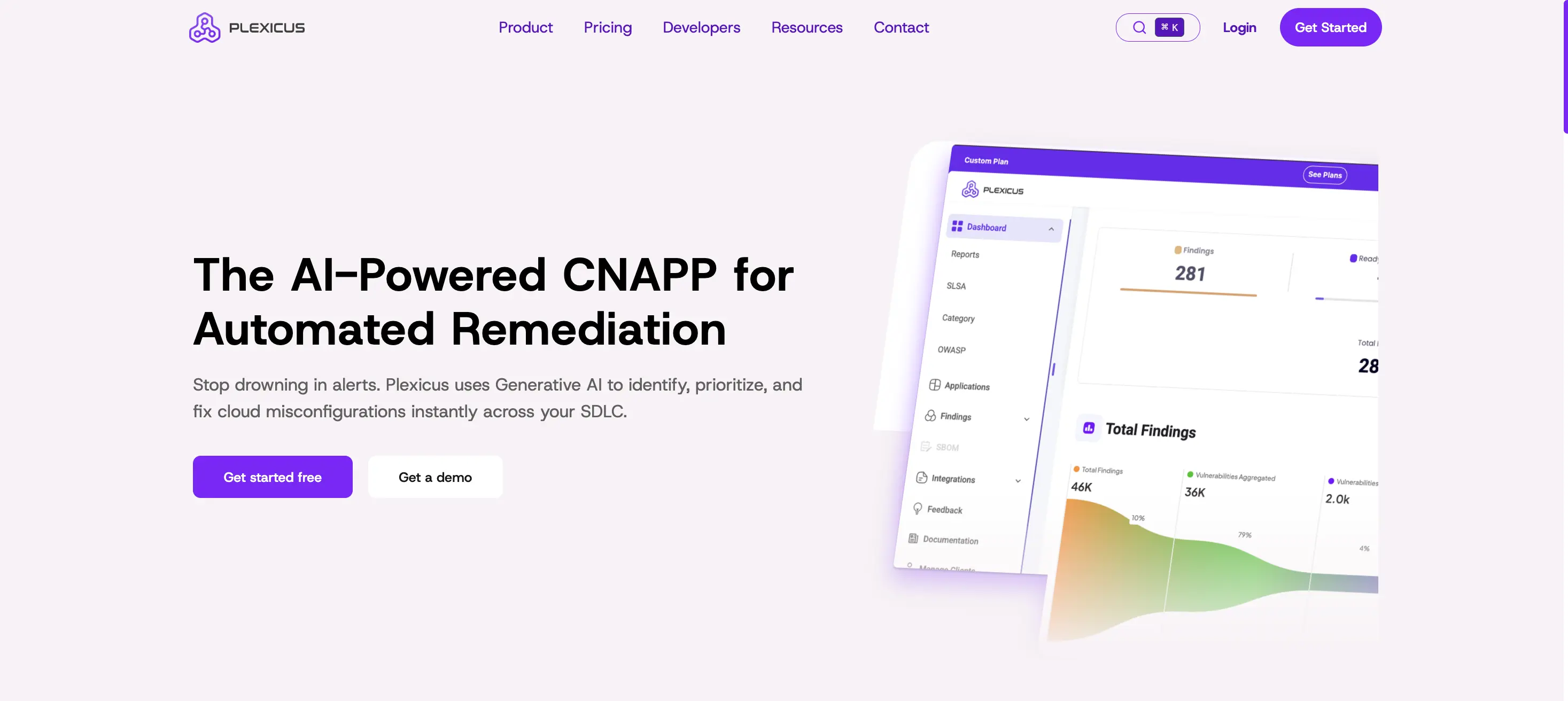
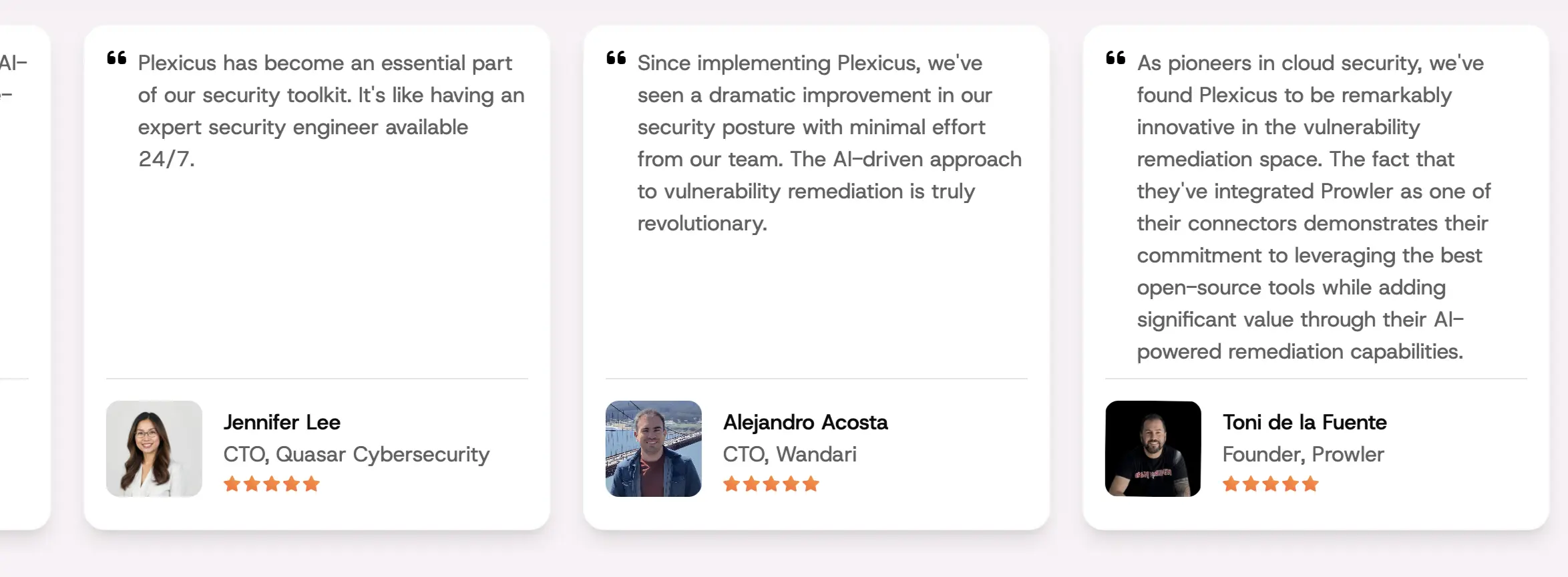
Plexicus is the primary alternative for teams that love the AI-driven nature of FortiCNAPP but need it to be remediation-focused. While FortiCNAPP tells you that a behavior is “anomalous,” Plexicus tells you exactly which line of code caused the risk and offers a patch to fix it.
- Key Features: Codex Remedium is an AI-powered engine that generates code patches, pull requests, and unit tests specifically for identified vulnerabilities in your code and cloud.
- Core Differentiator: Plexicus replaces the manual research-and-fix cycle with Human-Triggered AI Remediation. A developer identifies a risk, clicks the “AI Remediation” button, and receives a pre-written Pull Request.
- Pros: Reduces MTTR (Mean Time to Remediation) by up to 95%; connects code (SAST/SCA) and cloud (CSPM) in a single, unified remediation flow.
- Cons: Production environments still require a human gatekeeper to approve the AI-generated PR.
- Best For: Automated Remediation & AI Patching
2. Wiz
Wiz is the most common enterprise alternative to FortiCNAPP. It is legendary for its Security Graph, which maps out the “Toxic Combinations” of risks that Fortinet’s behavioral alerts might miss.
- Key Features: Agentless scanning across AWS, Azure, GCP, and OCI; deep attack path analysis.
- Core Differentiator: Exceptional UI/UX that makes complex cross-environment risks visible in minutes without any agents.
- Pros: Fastest “time-to-visibility” in the market; extremely high fidelity for cloud misconfigurations.
- Cons: Pricing can scale rapidly; limited real-time “blocking” compared to agent-based runtime tools.
- Best For: Multi-Cloud Visibility & Graph Analysis
3. Orca Security
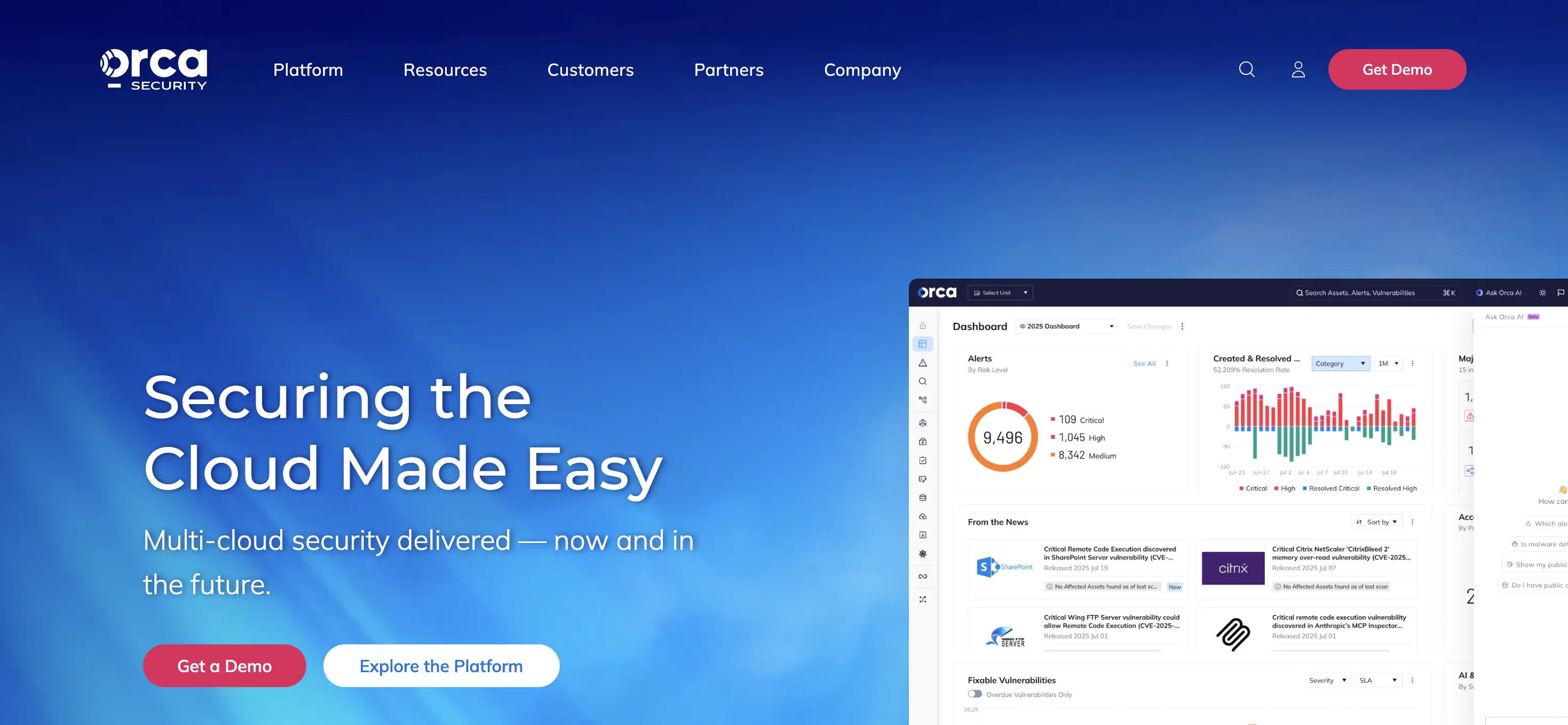
Orca pioneered SideScanning, which allows it to see into your virtual machines and containers without agents. It is the go-to alternative for teams prioritizing Data Security (DSPM).
- Key Features: Agentless workload scanning; sensitive data discovery across S3 buckets and databases.
- Core Differentiator: A unified data model that provides “full stack” visibility into OS, apps, and data without the friction of deploying agents.
- Pros: Deep visibility into unmanaged assets; excellent for compliance audits.
- Cons: Lacks the active runtime “process killing” capabilities of an eBPF-based tool.
- Best For: Data Security & SideScanning
4. Sysdig Secure
If you prioritize Active Blocking and Kubernetes forensics over FortiCNAPP’s behavioral modeling, Sysdig is the standard. It is built on the open-source Falco project.
- Key Features: eBPF-based runtime protection; Kubernetes-native threat detection.
- Core Differentiator: It detects kernel-level attacks in real time, enabling the blocking of unauthorized shells or processes.
- Pros: Best-in-class container security; deep post-incident forensics.
- Cons: High technical overhead; requires agent deployment across all nodes.
- Best For: Kubernetes Forensics & Active Blocking
5. Prisma Cloud (Palo Alto Networks)

The “Heavyweight” alternative. Prisma Cloud is for organizations that want to consolidate their entire security stack, from firewalls to cloud posture, under one vendor.
- Key Features: Unified Policy-as-Code; deep integration with Palo Alto’s global threat intelligence.
- Core Differentiator: It is the most comprehensive platform for highly regulated industries needing 360-degree compliance reporting.
- Pros: Covers everything from code to network security.
- Cons: Extremely complex to manage; often requires a dedicated team of “Prisma Admins.”
- Best For: Enterprise Consolidation & Policy-as-Code
6. CrowdStrike Falcon Cloud Security
CrowdStrike is for teams that want cloud security to work like their endpoint security. It is built on the same unified Falcon Agent and is threat-hunting first.
- Key Features: 24/7 Managed Detection and Response (MDR); integrated identity protection (CIEM).
- Core Differentiator: Combines industry-leading threat intelligence with a single agent for both cloud workloads and local endpoints.
- Pros: World-class breach prevention; seamless if you are already in the CrowdStrike ecosystem.
- Cons: Less focus on “Shift Left” / developer-side code scanning than specialized AppSec tools.
- Best For: Threat Hunting & EDR Integration
7. SentinelOne Singularity Cloud

SentinelOne is an AI-first alternative that focuses on Autonomous Security. It is excellent for lean SOC teams that need an AI to hunt threats in real-time.
- Key Features: Offensive AI Engine that decodes attacker tactics; automated malware analysis for cloud workloads.
- Core Differentiator: Uses its “Storyline” technology to track an attack’s entire lifecycle across the cloud autonomously.
- Pros: Very strong “Zero-Day” detection; high degree of SOC automation.
- Cons: Primarily an agent-based solution, which can involve more deployment effort.
- Best For: Autonomous SOC & AI Hunting
8. Snyk
If your primary issue with FortiCNAPP is that your developers won’t log into it, Snyk is the alternative. It lives in the IDE and the Pull Request.
- Key Features: Native IDE integration; automated PRs for library upgrades and IaC fixes.
- Core Differentiator: The industry’s largest proprietary vulnerability database, built specifically for developers.
- Pros: Massive developer adoption; catches bugs before they reach the cloud.
- Cons: Its cloud-runtime protection is still secondary to its AppSec features.
- Best For: Developer Adoption & Code Security
9. Check Point CloudGuard
CloudGuard is the strongest alternative for teams that need to maintain strict Network Security and unified firewall policies across on-prem and cloud environments.
- Key Features: High-fidelity cloud network security; automated posture management (CSPM).
- Core Differentiator: Ability to enforce the same security policies in the cloud as you do on your physical data center firewalls.
- Pros: Mature network-level prevention; strong API security.
- Cons: The interface can feel “legacy” compared to modern agentless startups.
- Best For: Network Security & Hybrid Clouds
10. Uptycs
Uptycs is a unique alternative that uses SQL as its primary security language. It is excellent for teams that want to “query” their entire fleet like a database.
- Key Features: SQL-powered unified visibility across endpoints, cloud, and containers.
- Core Differentiator: A single, global searchable inventory of every process, file, and connection in your estate.
- Pros: Incredible asset management and forensics; very powerful for custom reporting.
- Cons: Requires a more technical team comfortable with osquery/SQL.
- Best For: Asset Management & SQL Querying
FAQ: The Realities of 2026 Security
Why move away from FortiCNAPP/Lacework?
Many teams switch because of Operational Friction. While Lacework’s anomaly detection is powerful, it can generate “context-less” alerts that require significant manual investigation by developers who don’t have the time.
Does Plexicus replace FortiCNAPP’s anomaly detection?
Plexicus focuses on Remediation. While it monitors for risks, its primary value is helping you fix the vulnerabilities that cause anomalies. In 2026, the goal is to move from “seeing something weird” to “submitting a patch” in under 60 seconds.
Is agentless security enough for a hybrid cloud?
For most 2026 workflows, yes. Agentless tools (Plexicus, Wiz, Orca) provide visibility to see threats across 100% of your cloud instantly, which is often more valuable than having deep agents on only the 20% of servers that were successfully provisioned.