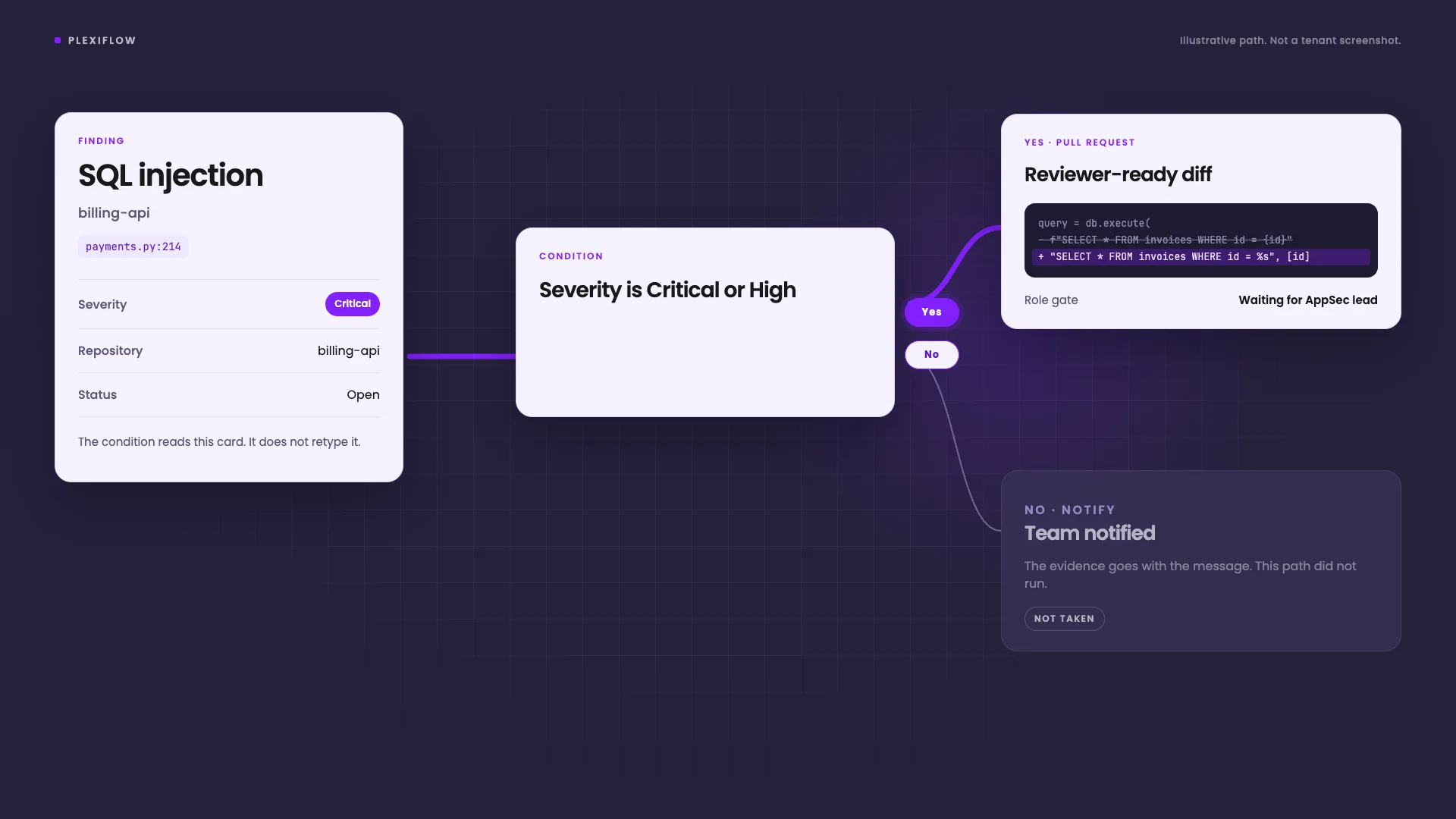

When a Critical Finding Lands, the Next Step Is Already Written
A finding should not wait in a list. PlexiFlow runs the path you already wrote: branch on severity, ask the named role, then start a fix or notify the team.
Josuanstya Lovdianchel is a Business Operations and Product professional with 4+ years of experience spanning product management, growth strategy, and AI-driven automation. He has shipped products end-to-end at scale — most notably at detikcom, Indonesia's largest digital media platform, where he delivered an ERP contributor platform to 100+ users with 100% adoption within one month of launch and led cross-functional teams across Engineering, AI, and Design. A certified Microsoft Azure practitioner with hands-on Python skills, he brings a data-first approach to every problem — from analyzing 10,000+ user reviews to surface product strategy, to building AI-powered notification systems targeting double-digit CTR uplifts. At Plexicus, he applies the same product and automation mindset to business operations, turning complex workflows into scalable systems.
A finding should not wait in a list. PlexiFlow runs the path you already wrote: branch on severity, ask the named role, then start a fix or notify the team.
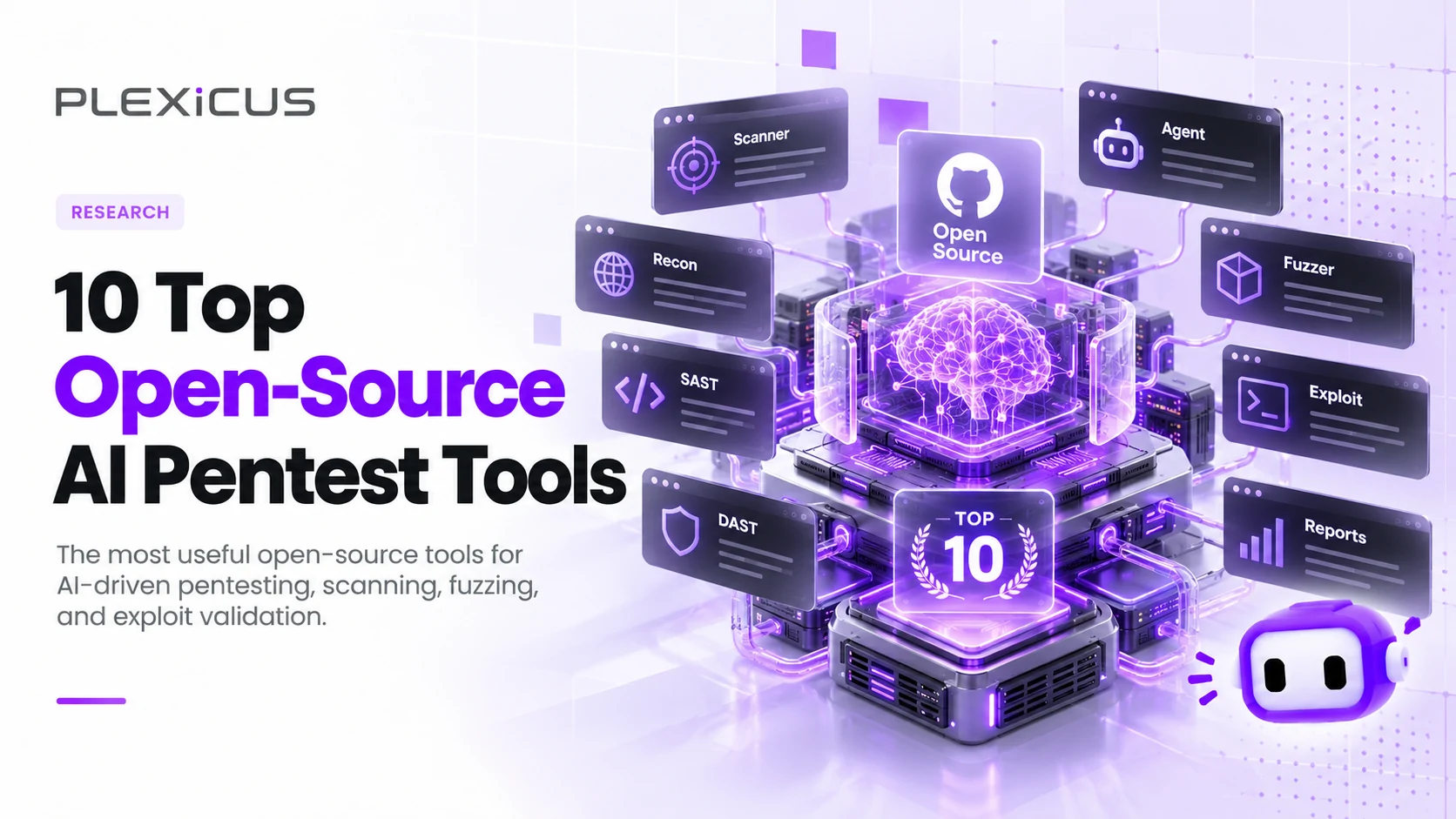
Open-source AI pentesting has split into distinct categories: autonomous application pentesters, multi-agent orchestration platforms, verification-first agents, and MCP tool layers. We reviewed 10 actively developed projects and explained what each one is genuinely good at.
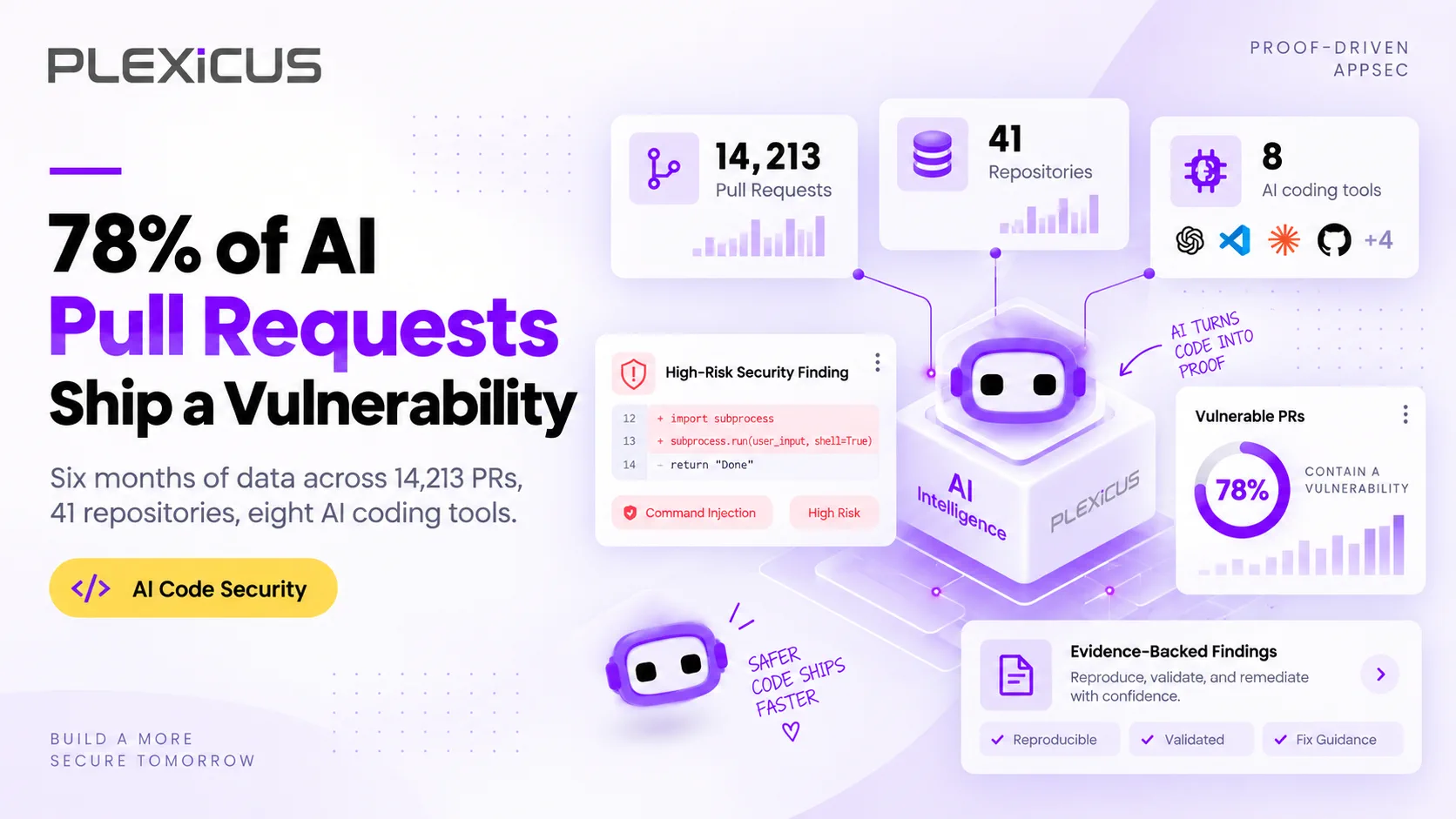
78% of 14,213 AI-assisted pull requests we scanned contained a vulnerability that survived human review. Here is how we measured it, the flaw classes, and what fixes it.
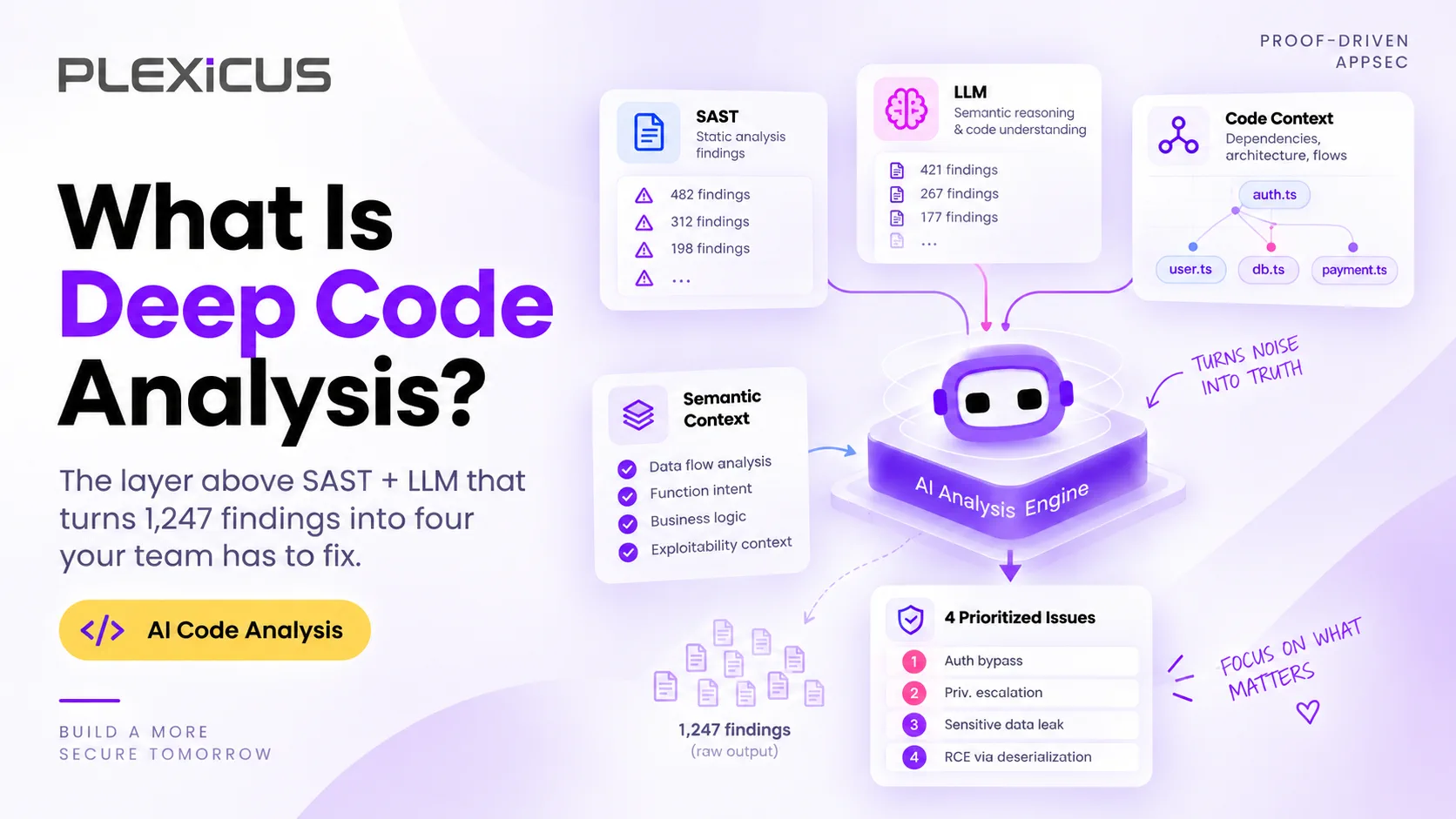
SAST false positives bury real bugs, and an LLM wrapper does not fix that. Deep Code Analysis uses reachability analysis to prove which findings are real, reachable, and worth fixing.
Gli strumenti di codifica AI stanno rendendo gli sviluppatori più veloci — ma uno sviluppo più rapido richiede anche una migliore visibilità, flussi di revisione più solidi e una remediation più affidabile. Questa è una guida pratica alla governance per i team che adottano Codex, Claude Code, Cursor, Windsurf e altri agenti di codifica AI.
La sola rilevazione non riesce a tenere il passo con lo sviluppo a velocità AI. Il rimedio AI-nativo è il livello successivo — che aiuta i team a correggere, convalidare e tracciare le vulnerabilità nel codice generato dall'IA in ogni fase del SDLC.
Gli strumenti di codifica AI stanno scrivendo quasi la metà di tutto il nuovo codice. E il 45% di quel codice viene rilasciato con almeno una vulnerabilità. La sicurezza del vibe coding è la pratica di proteggere il software creato dall'IA, rilevando, prioritizzando e correggendo i rischi prima che raggiungano la produzione.
Plexicus is Proof-Driven AppSec: validated findings, contextual understanding, and reviewed remediation — anchored in evidence, scoped with you.