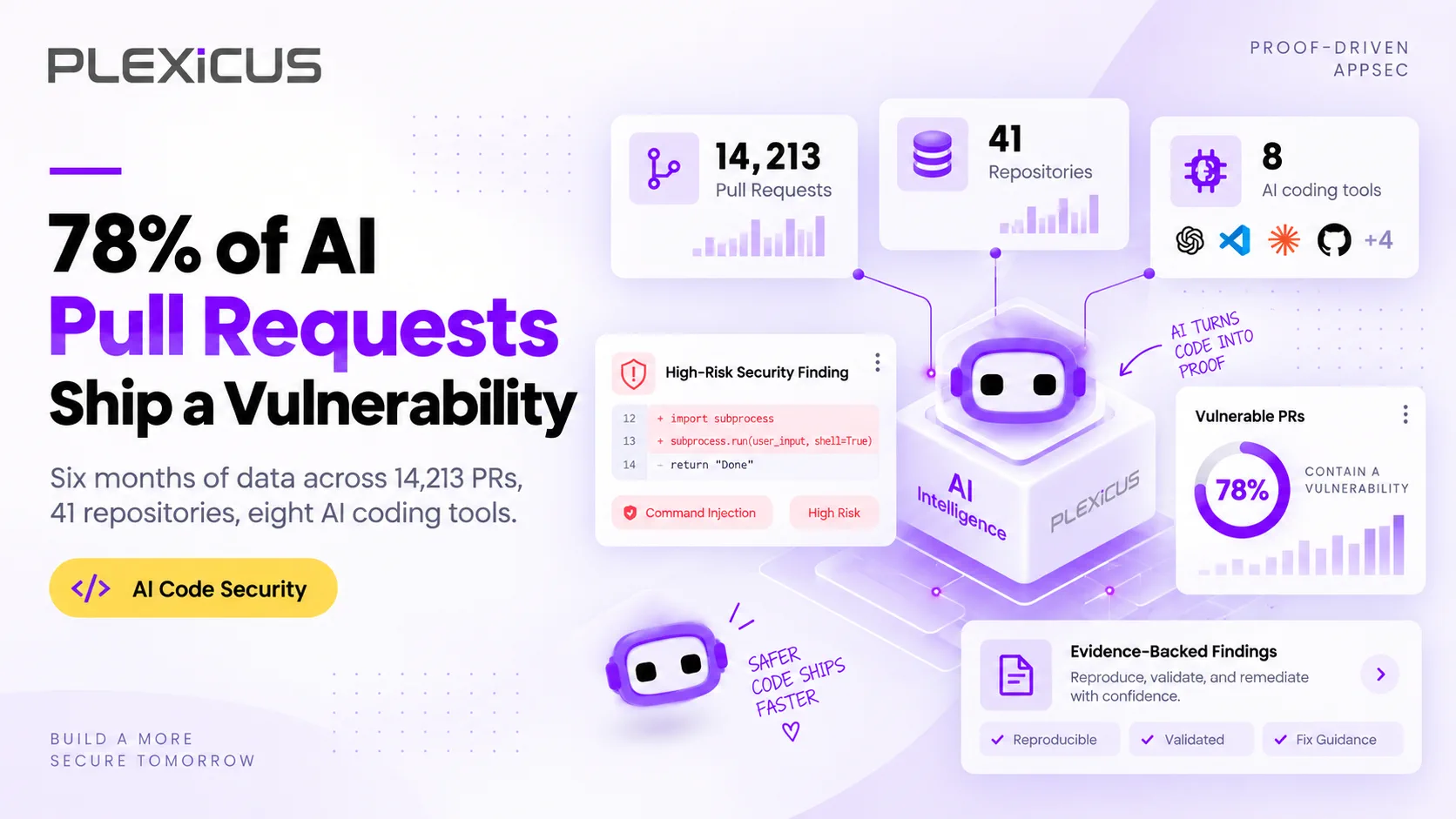

AI-Generated Code Security: 78% of AI PRs We Scanned Shipped a Vulnerability
78% of 14,213 AI-assisted pull requests we scanned contained a vulnerability that survived human review. Here is how we measured it, the flaw classes, and what fixes it.
Josuanstya Lovdianchel is a Business Operations and Product professional with 4+ years of experience spanning product management, growth strategy, and AI-driven automation. He has shipped products end-to-end at scale — most notably at detikcom, Indonesia's largest digital media platform, where he delivered an ERP contributor platform to 100+ users with 100% adoption within one month of launch and led cross-functional teams across Engineering, AI, and Design. A certified Microsoft Azure practitioner with hands-on Python skills, he brings a data-first approach to every problem — from analyzing 10,000+ user reviews to surface product strategy, to building AI-powered notification systems targeting double-digit CTR uplifts. At Plexicus, he applies the same product and automation mindset to business operations, turning complex workflows into scalable systems.
78% of 14,213 AI-assisted pull requests we scanned contained a vulnerability that survived human review. Here is how we measured it, the flaw classes, and what fixes it.
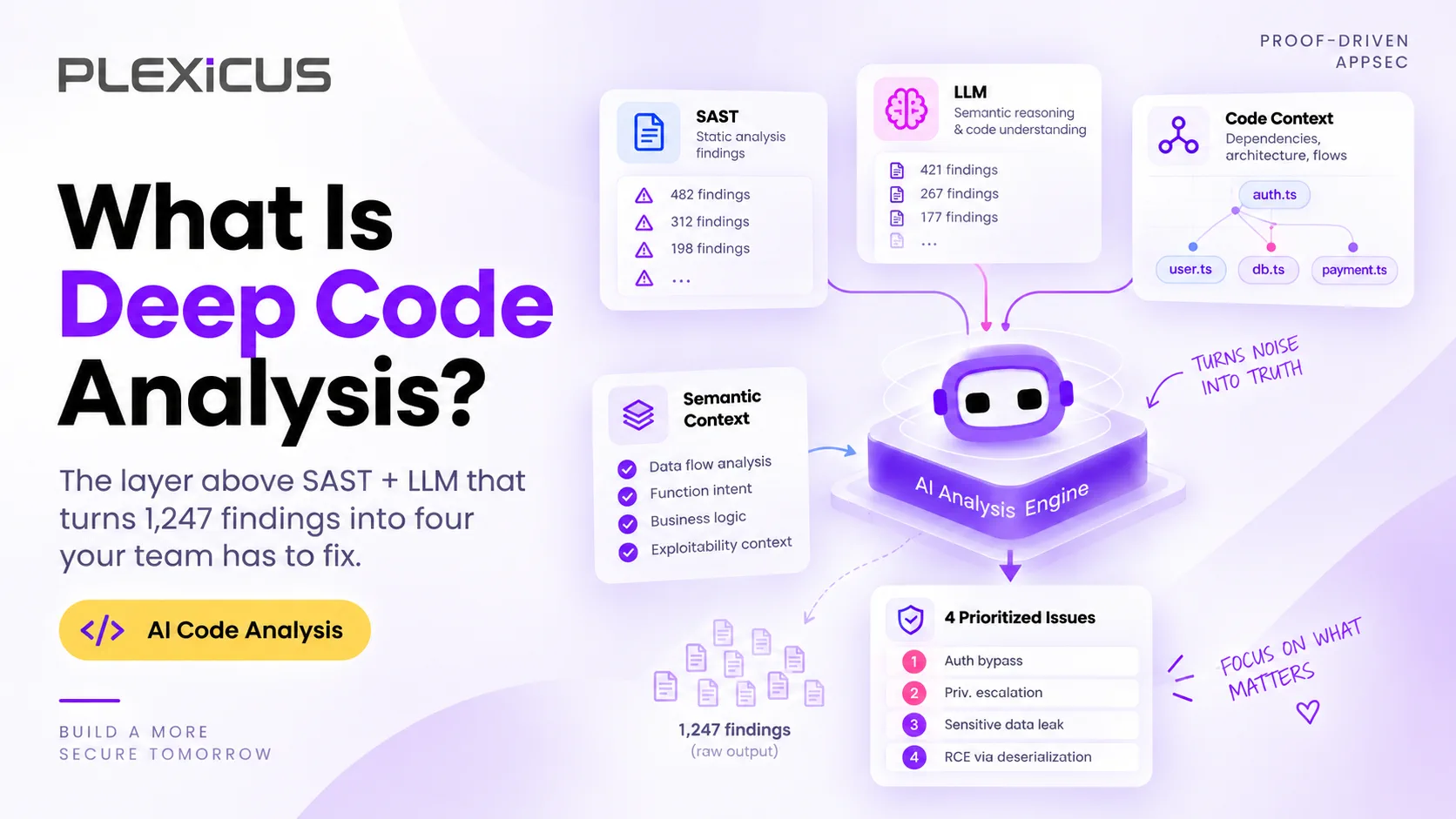
SAST false positives bury real bugs, and an LLM wrapper does not fix that. Deep Code Analysis uses reachability analysis to prove which findings are real, reachable, and worth fixing.
أدوات البرمجة بالذكاء الاصطناعي تجعل المطورين أسرع — لكن التطوير الأسرع يتطلب أيضًا رؤية أفضل، وسير عمل مراجعة أقوى، ومعالجة أكثر موثوقية. هذا دليل حوكمة عملي للفرق التي تتبنى Codex وClaude Code وCursor وWindsurf وعوامل البرمجة بالذكاء الاصطناعي الأخرى.
الكشف وحده لا يستطيع مواكبة سرعة التطوير بالذكاء الاصطناعي. التصحيح الأصلي بالذكاء الاصطناعي هو الطبقة التالية - حيث يساعد الفرق على إصلاح الثغرات الأمنية والتحقق منها وتتبعها في الشفرة المُنشأة بالذكاء الاصطناعي في كل مرحلة من مراحل دورة حياة تطوير البرمجيات (SDLC).
تكتب أدوات الترميز بالذكاء الاصطناعي ما يقرب من نصف جميع الأكواد الجديدة. و45% من هذه الأكواد تُنشر مع ثغرة أمنية واحدة على الأقل. أمان الترميز التلقائي هو ممارسة تأمين البرمجيات المُنشأة بالذكاء الاصطناعي — اكتشاف المخاطر وترتيب أولوياتها ومعالجتها قبل وصولها إلى الإنتاج.
Plexicus is Proof-Driven AppSec: validated findings, contextual understanding, and reviewed remediation — anchored in evidence, scoped with you.