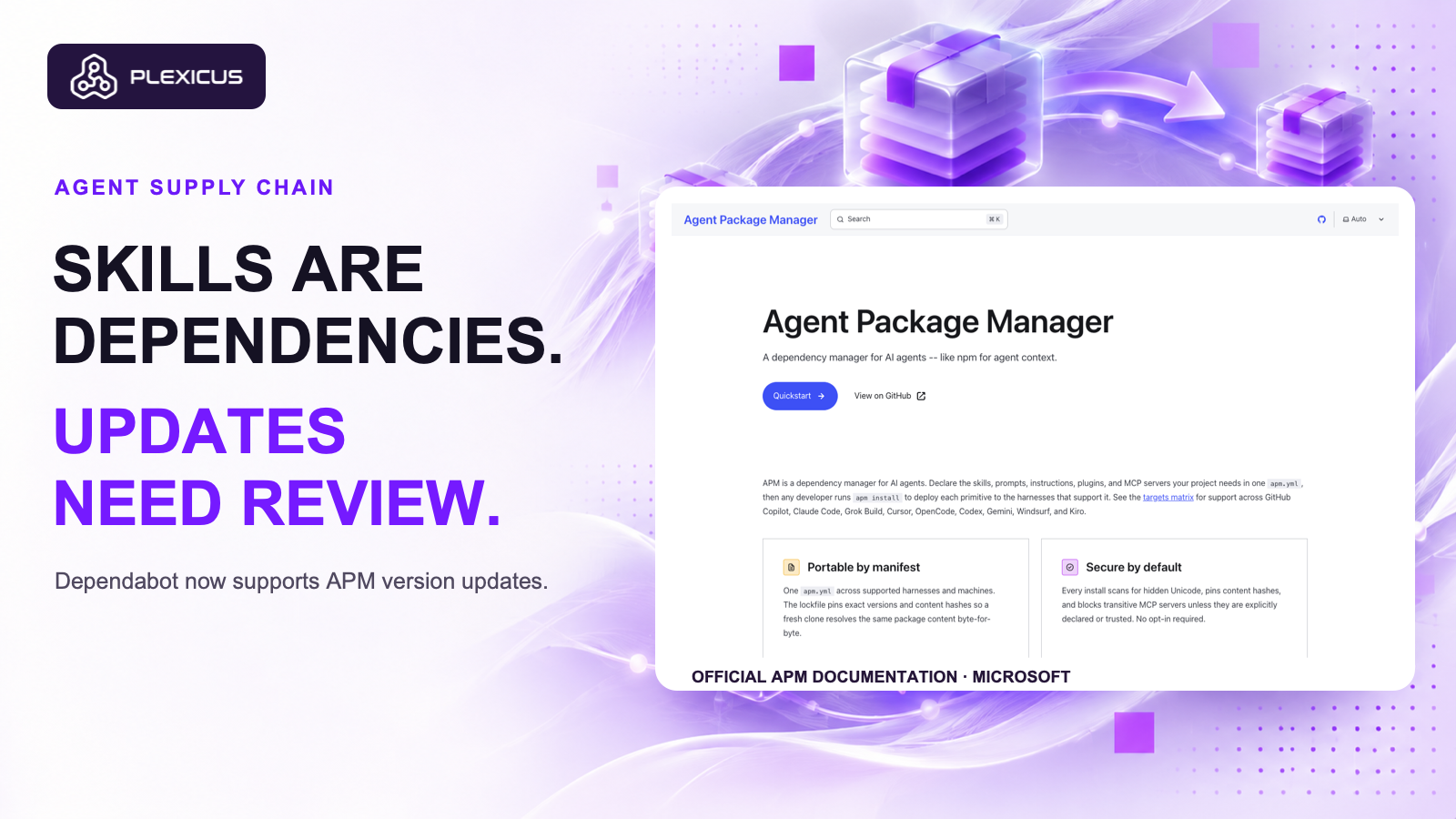
Dependabot Can Update AI Agent Skills. Who Reviews What Changed?
Dependabot can propose version updates for agent dependencies. The change puts skills and instructions into an existing review workflow.

Delivering Expert Articles, Timely Content, and Essential Updates on Cybersecurity, Startups, Business, Cloud-Native Security, and more.
Dependabot can propose version updates for agent dependencies. The change puts skills and instructions into an existing review workflow.
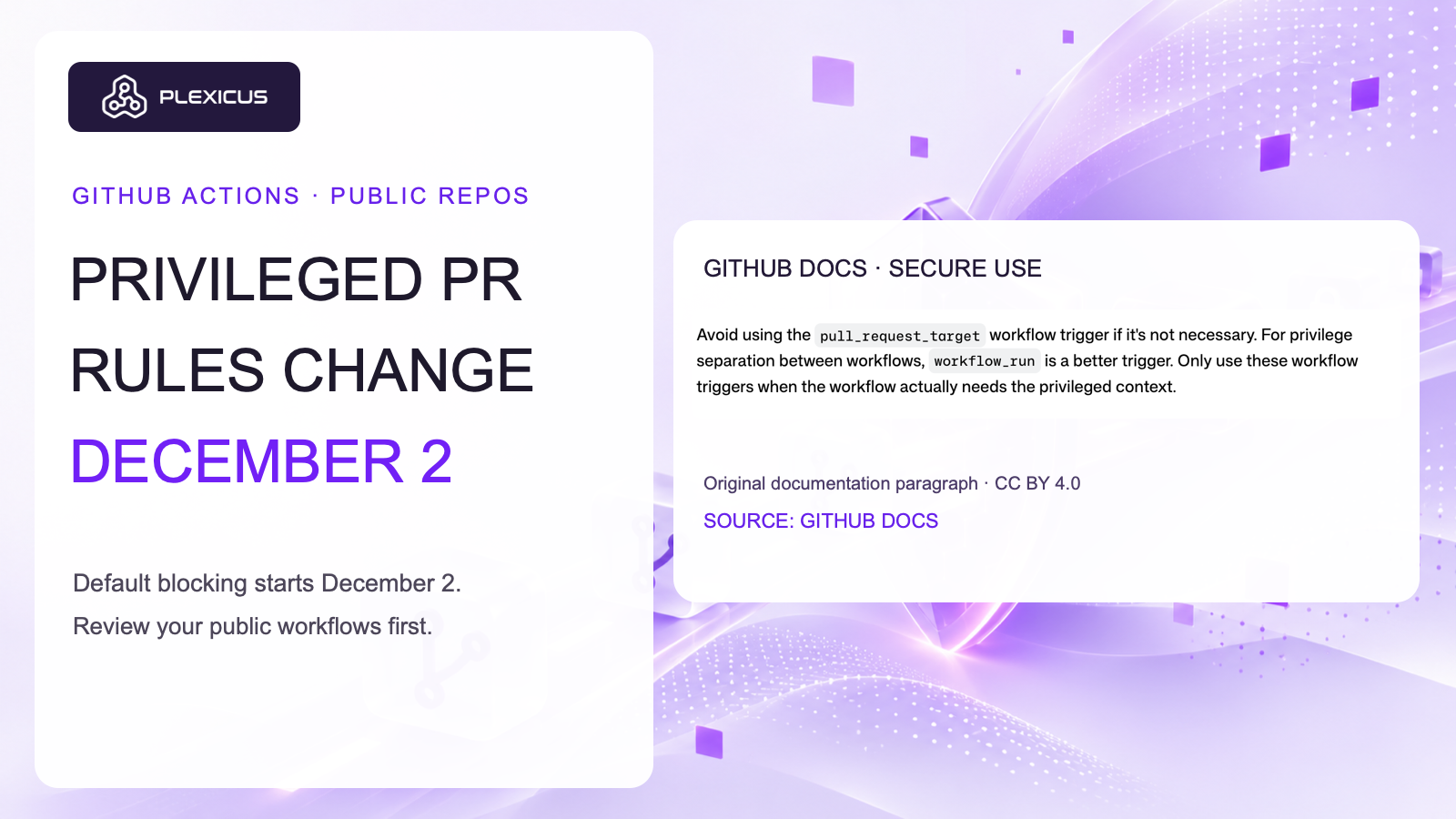
A GitHub Actions policy change puts privileged pull request workflows under scrutiny. Here is what maintainers can do before enforcement.
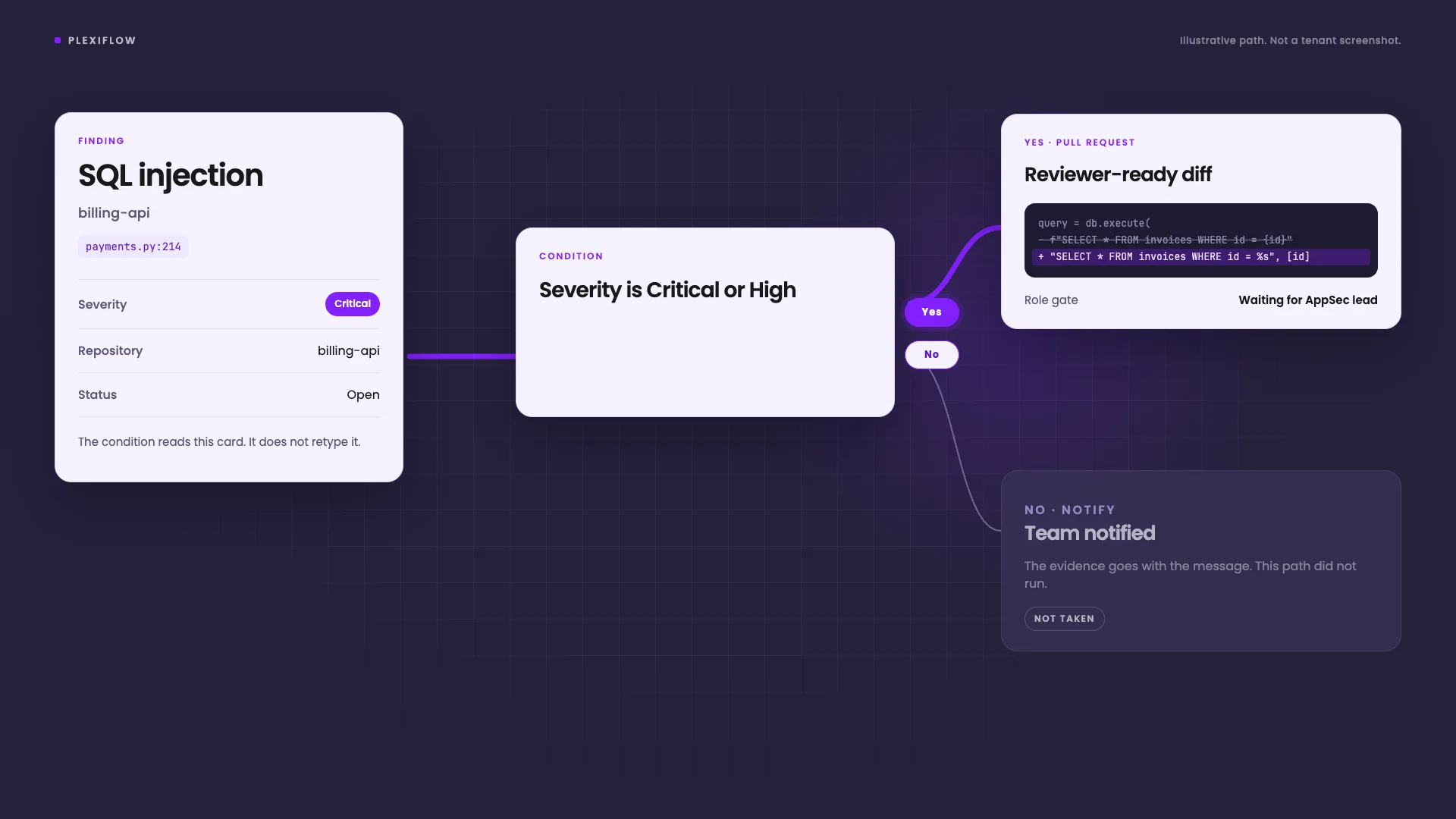
A finding should not wait in a list. PlexiFlow runs the path you already wrote: branch on severity, ask the named role, then start a fix or notify the team.
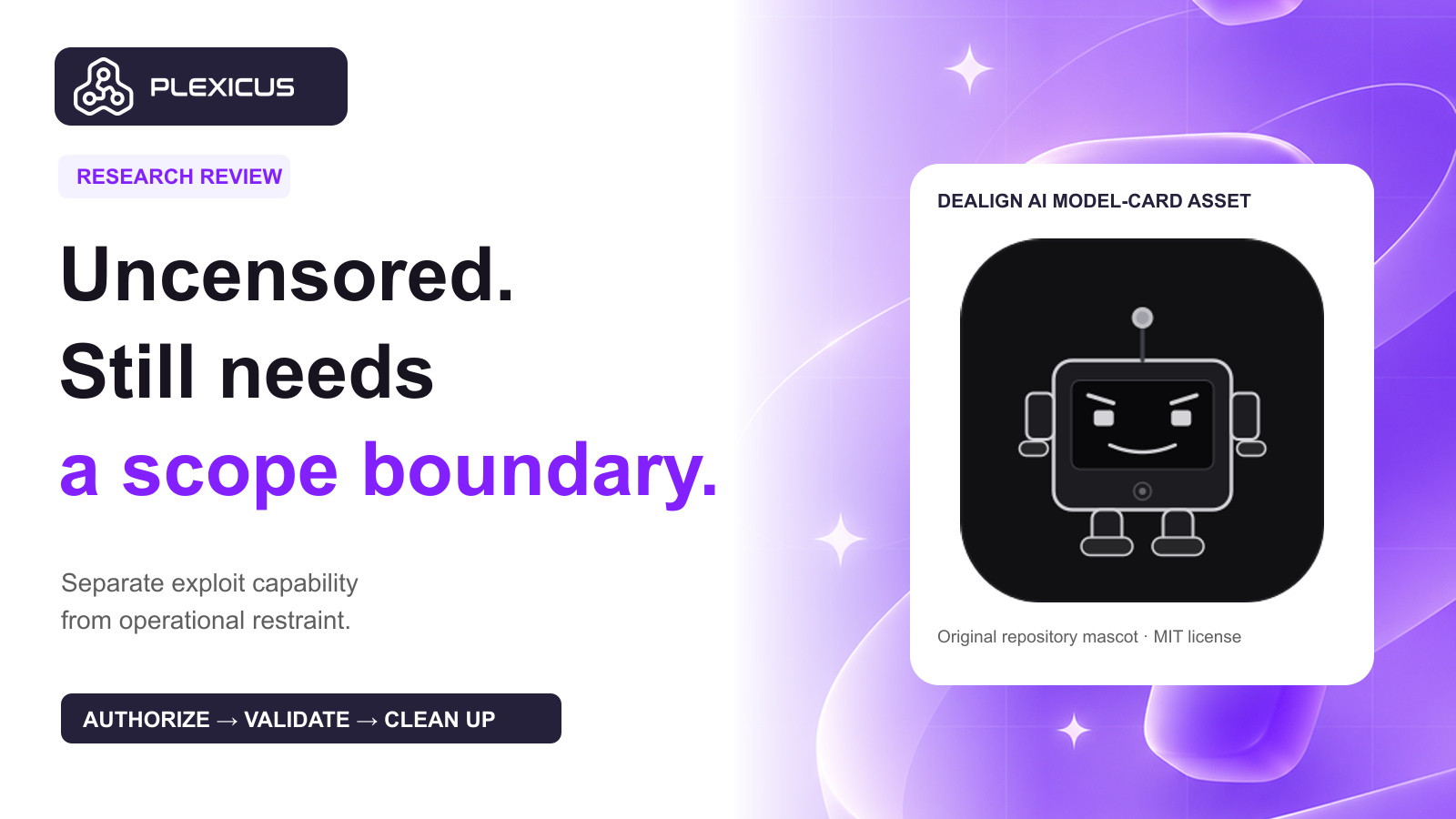
An internal DeepSeek evaluation separates exploit capability from operational restraint. Define scope, evidence and cleanup before autonomous testing.
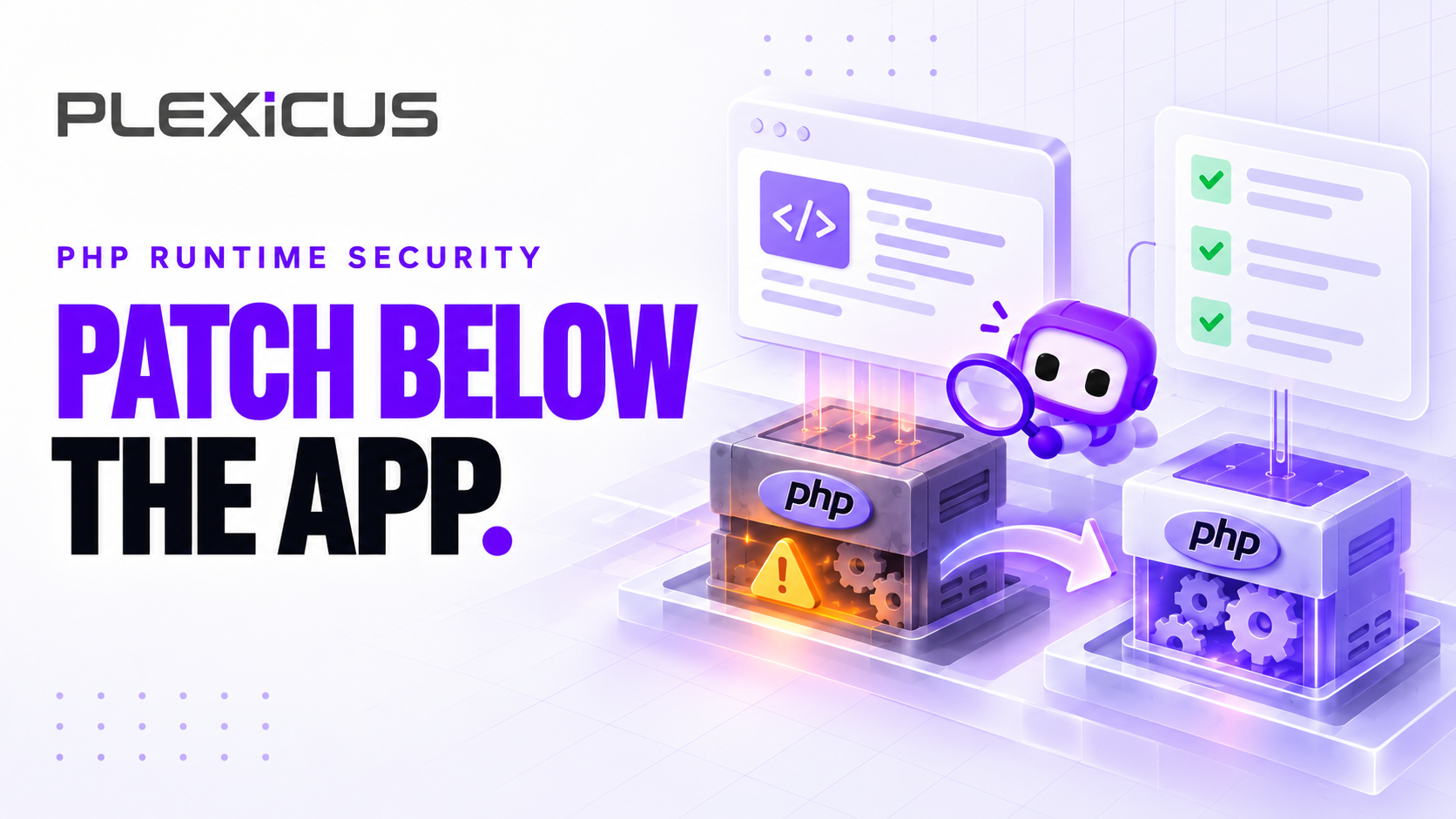
Separate PHP runtime exposure from application findings, verify worker replacement and keep remediation evidence reviewable with Plexicus.
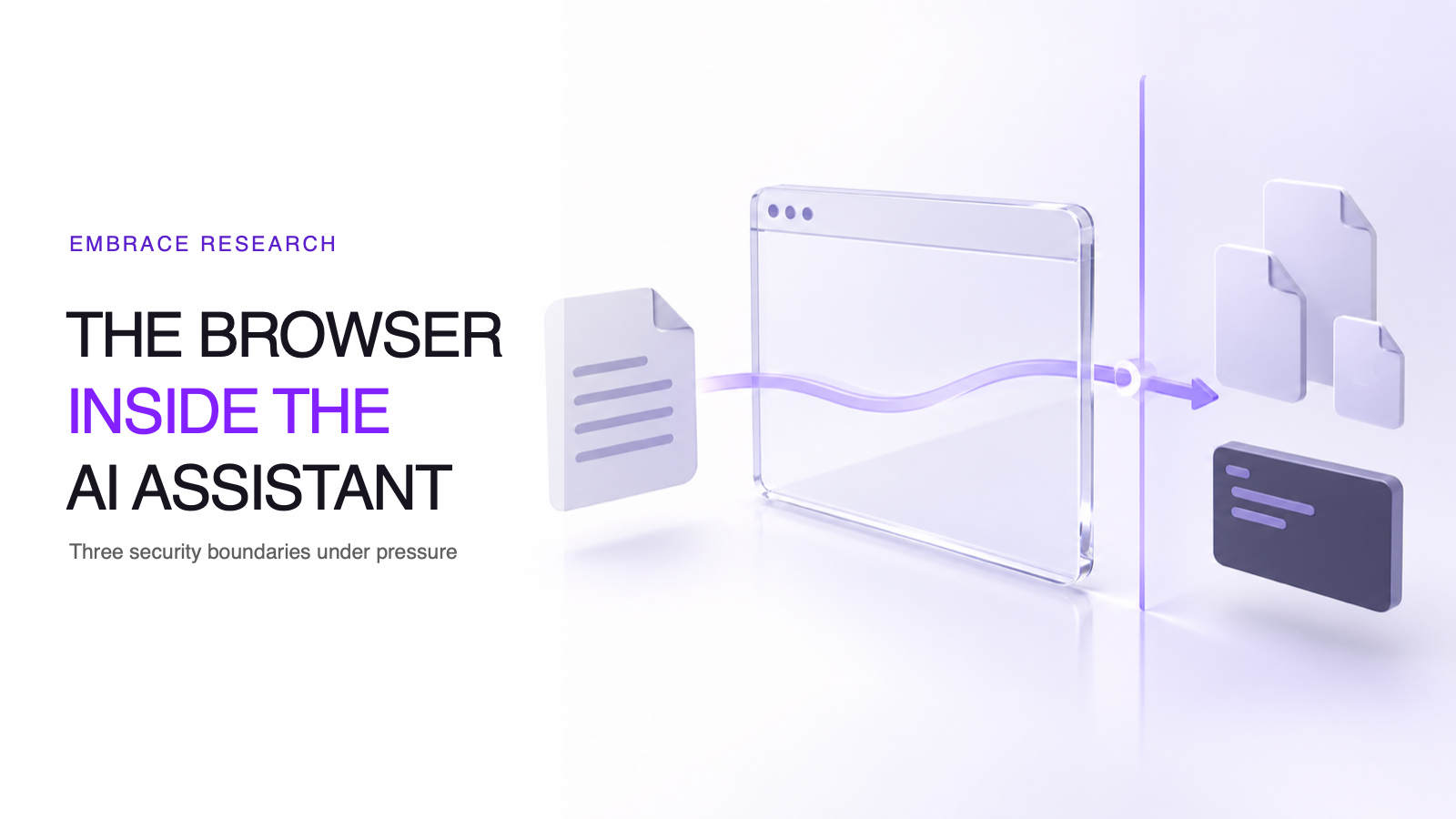
EMBRACE is a useful reminder that an embedded browser does not automatically keep the security boundaries of a standalone browser.
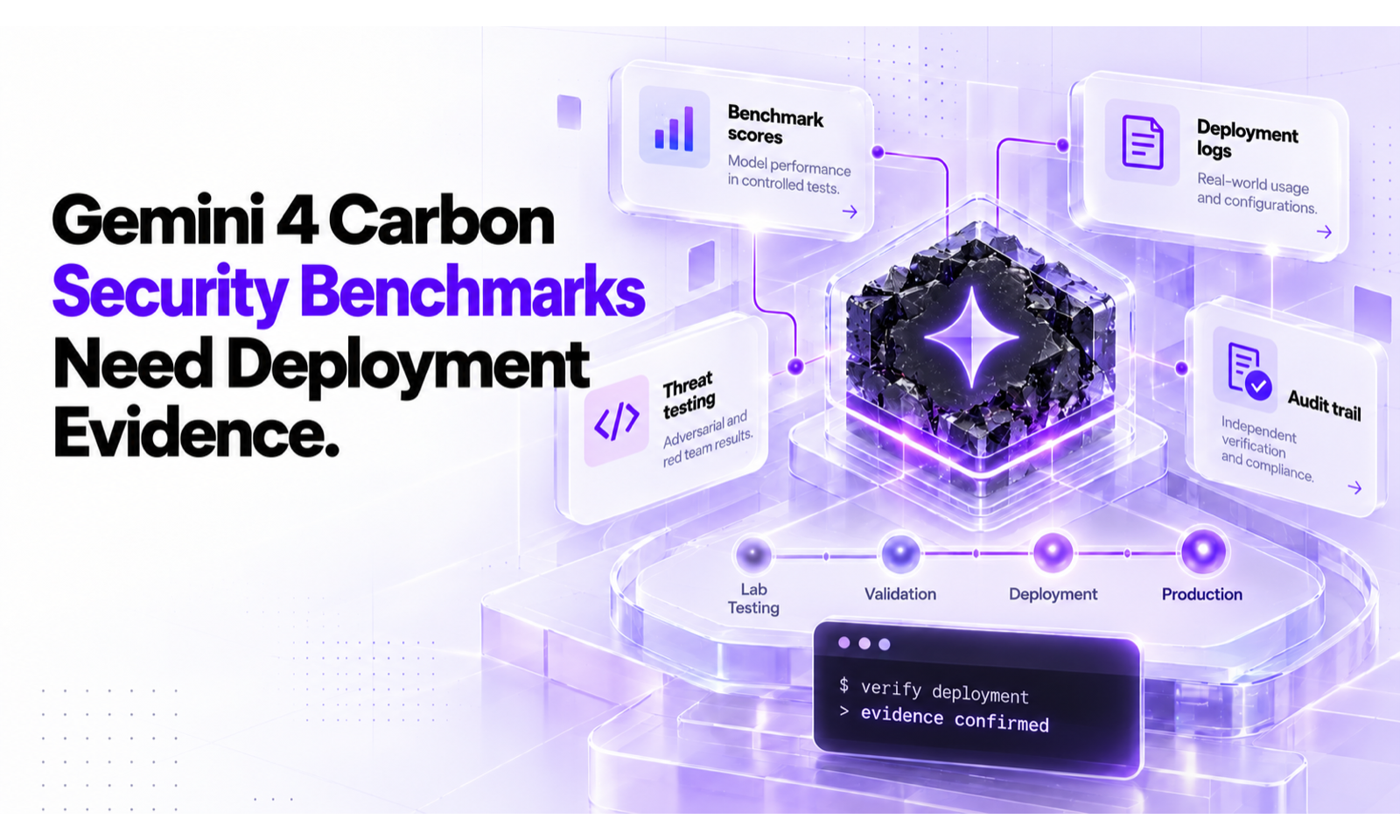
Turn AI security benchmark claims into a scoped evaluation with reproducible findings, reviewed patches and deployment retests.
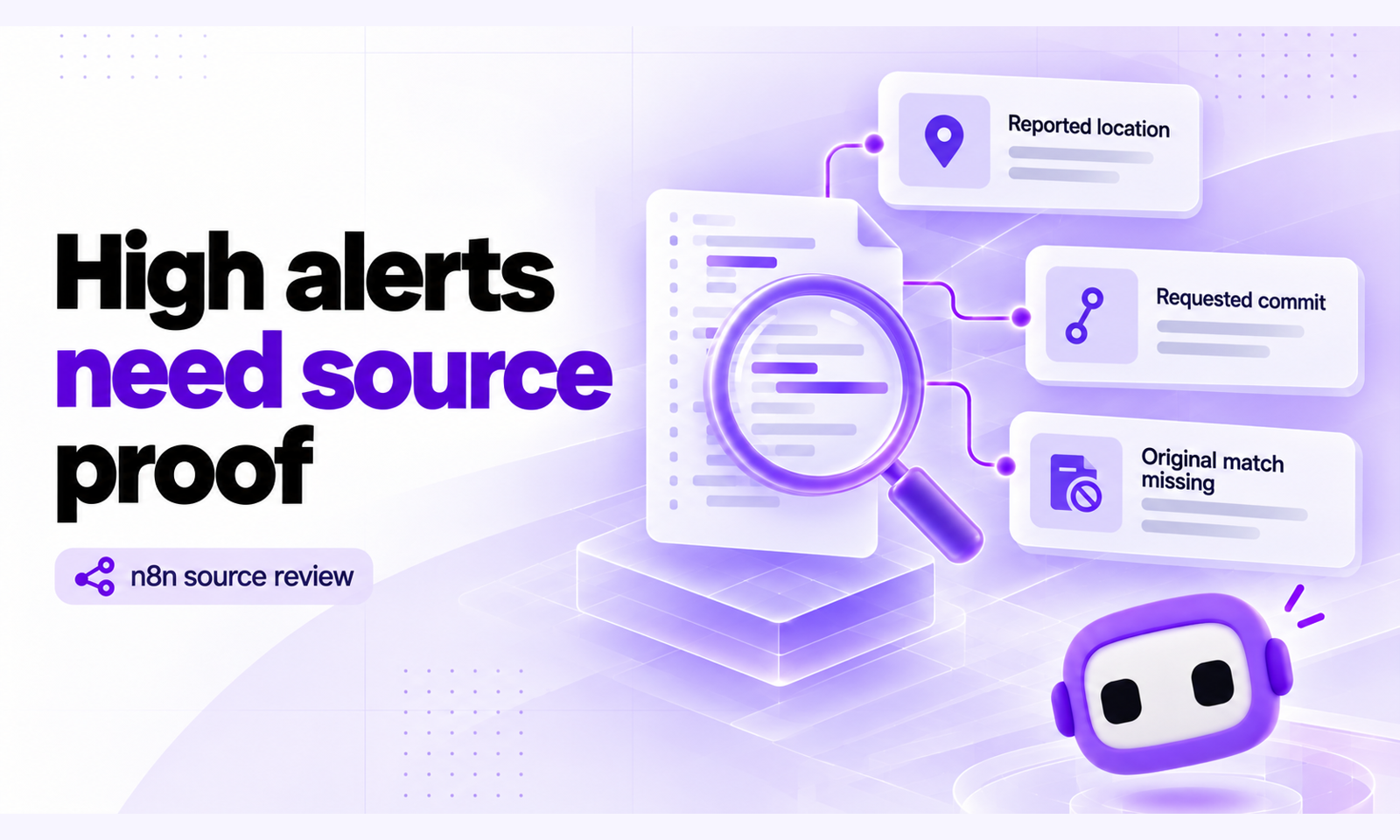
A source review of three high-severity n8n alerts shows why scan provenance and credential context matter before declaring a leak.
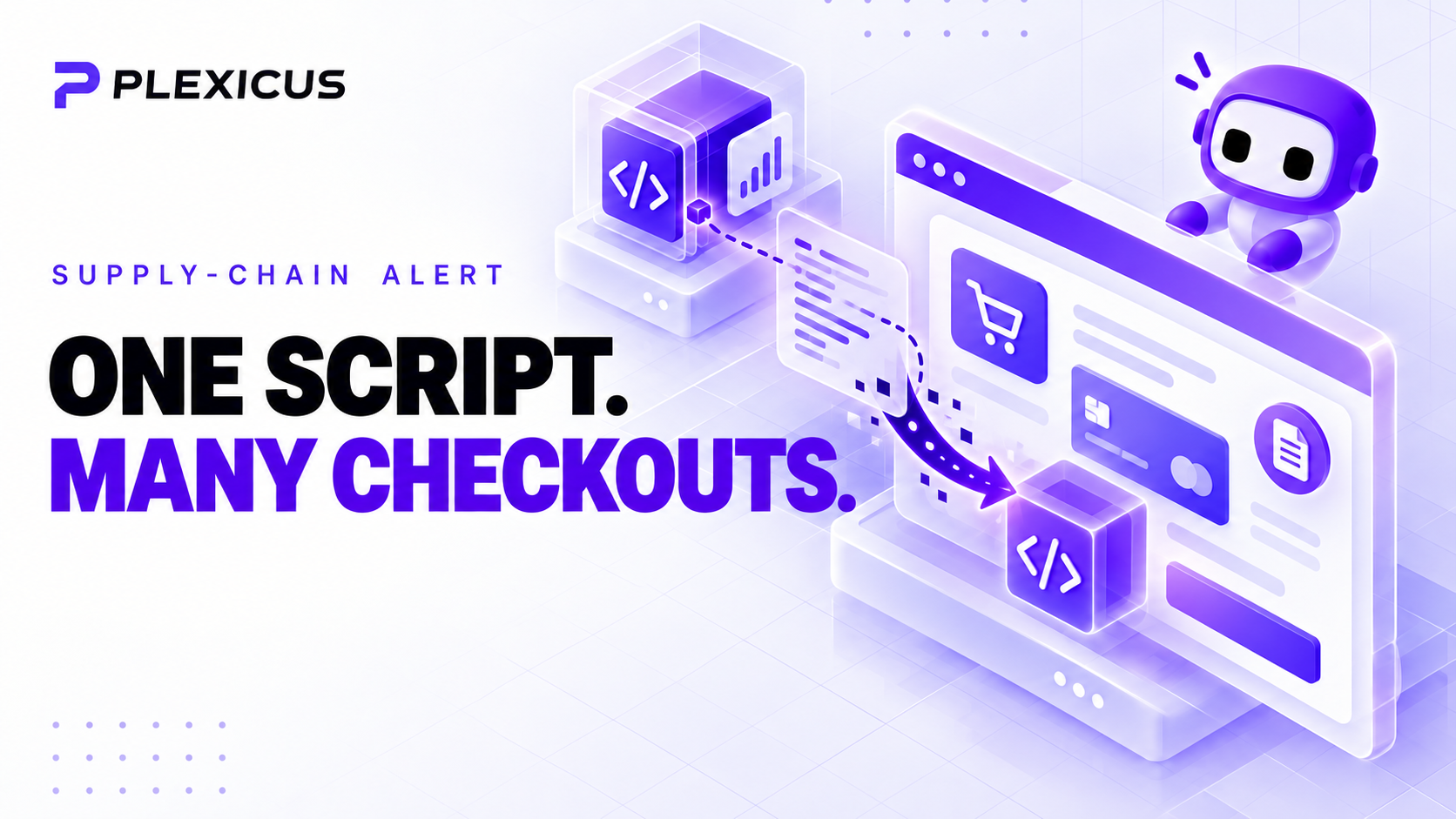
Review browser-loaded scripts, test integrity controls and retain deployment evidence after the Convertr analytics-script incident.
Map embedded Wasmtime dependencies to shipped artifacts, choose the correct advisory fix and verify rebuilt deployments with a Plexicus evidence workflow.
A practical evidence workflow for testing authorization boundaries, connecting code context to impact, and reviewing remediation with Plexicus.
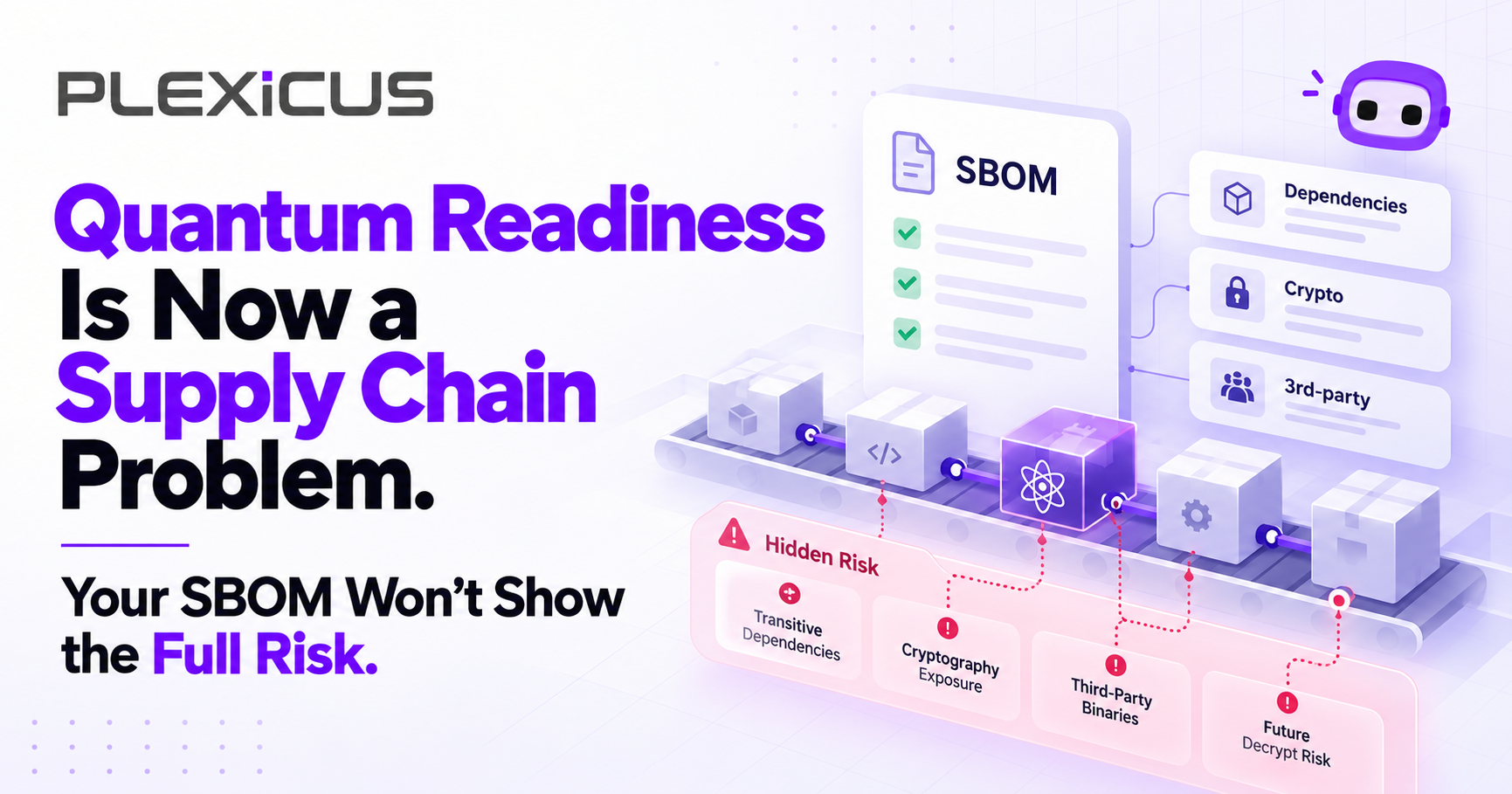
Quantum readiness starts with knowing where cryptography lives. Singapore’s 2026 milestones make discovery urgent, while SBOMs alone cannot show every algorithm, runtime setting or supplier dependency that may need a migration plan.
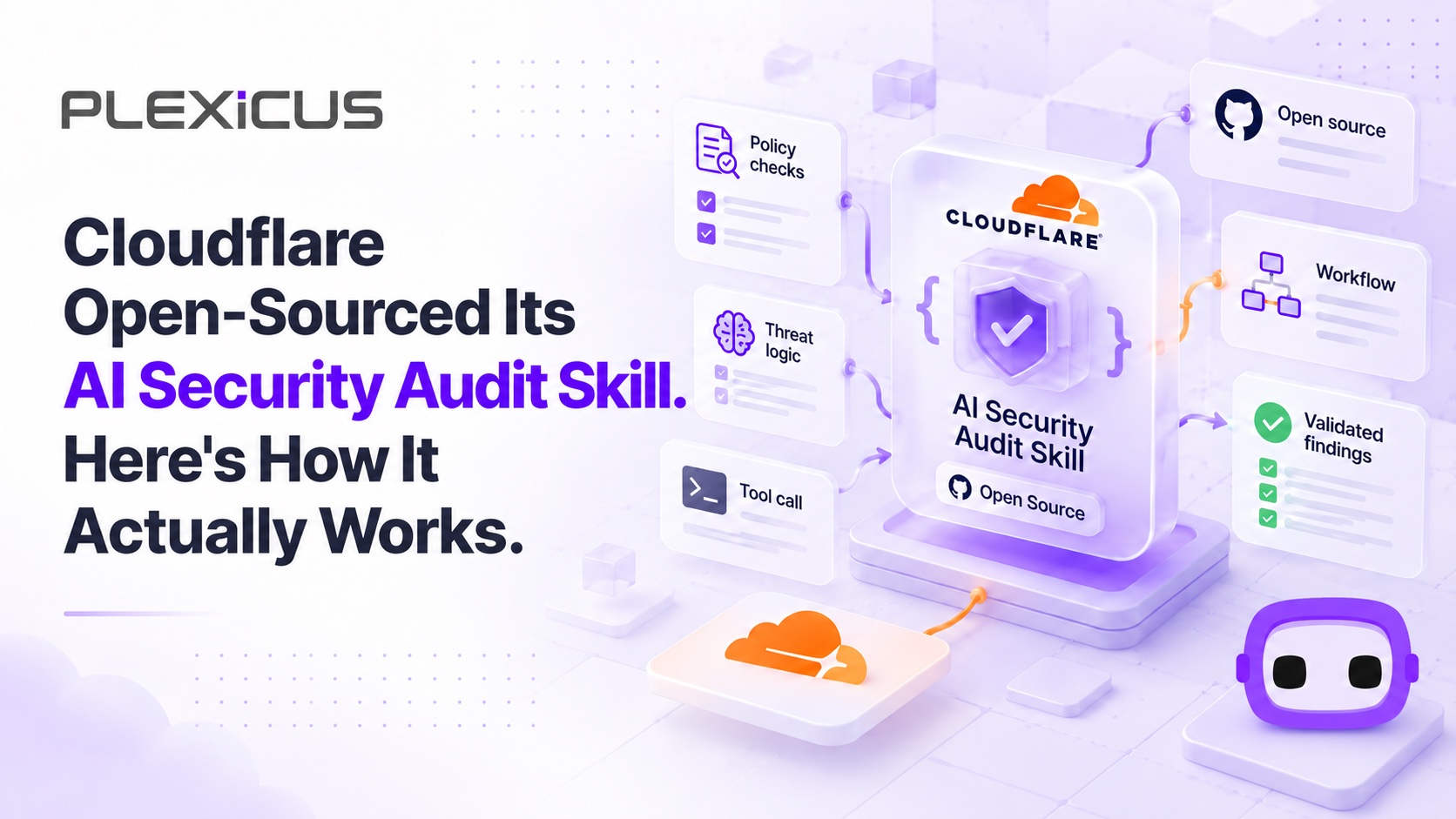
Cloudflare’s open-source coding-agent skill uses coverage-led hunting, independent validation, and structured evidence. Here is what the workflow can—and cannot—establish.
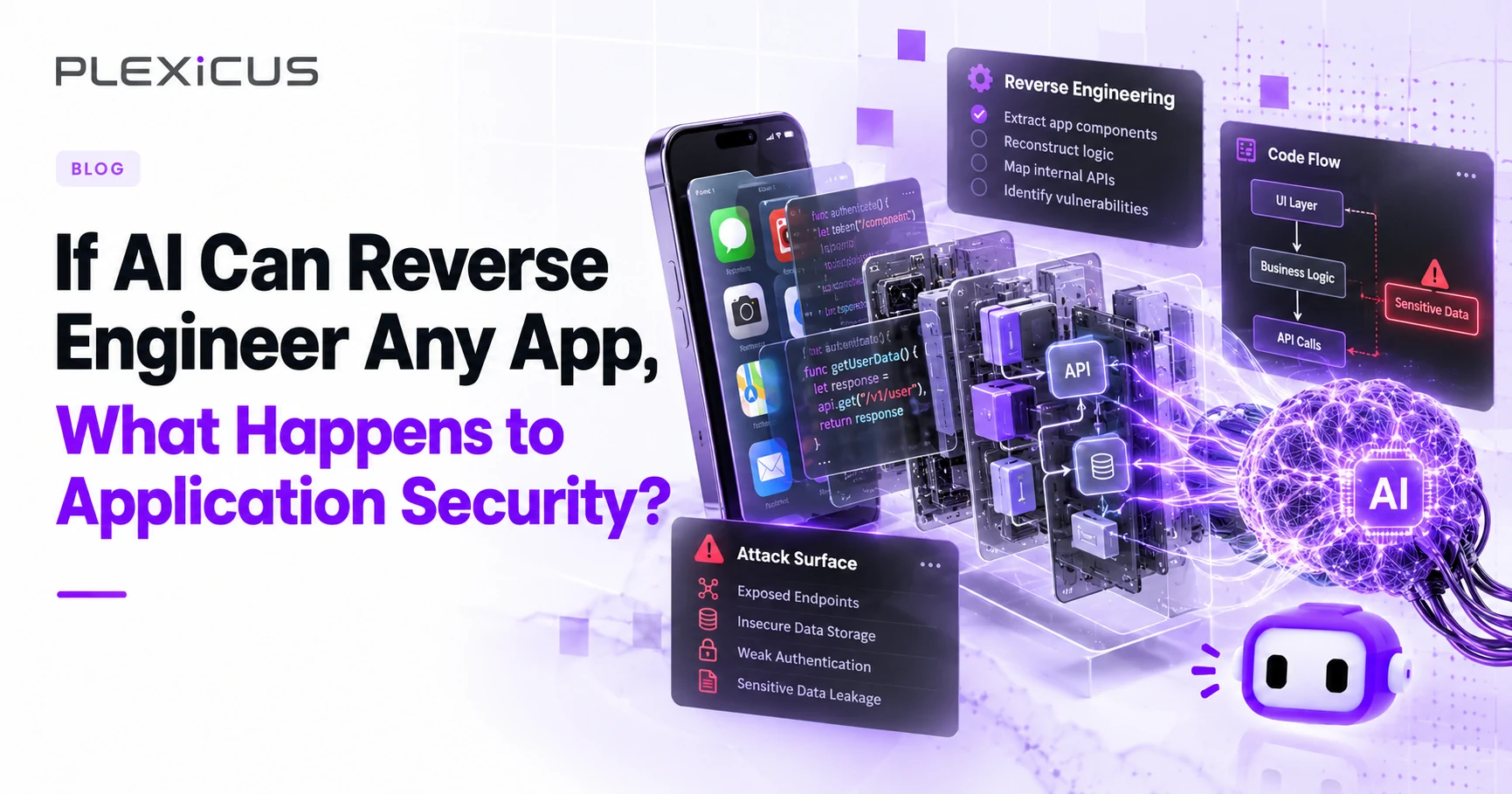
AI can help analysts navigate compiled software, but a decompiler output is not a vulnerability report. See how REA changes analysis, why reverse- engineering agents need protection, and how teams can validate findings.
Three systems asserted a condition and none of them checked whether it still held. A registry reported a package was attested. An evaluation harness reported a model was offline. An assistant reported a package would work.
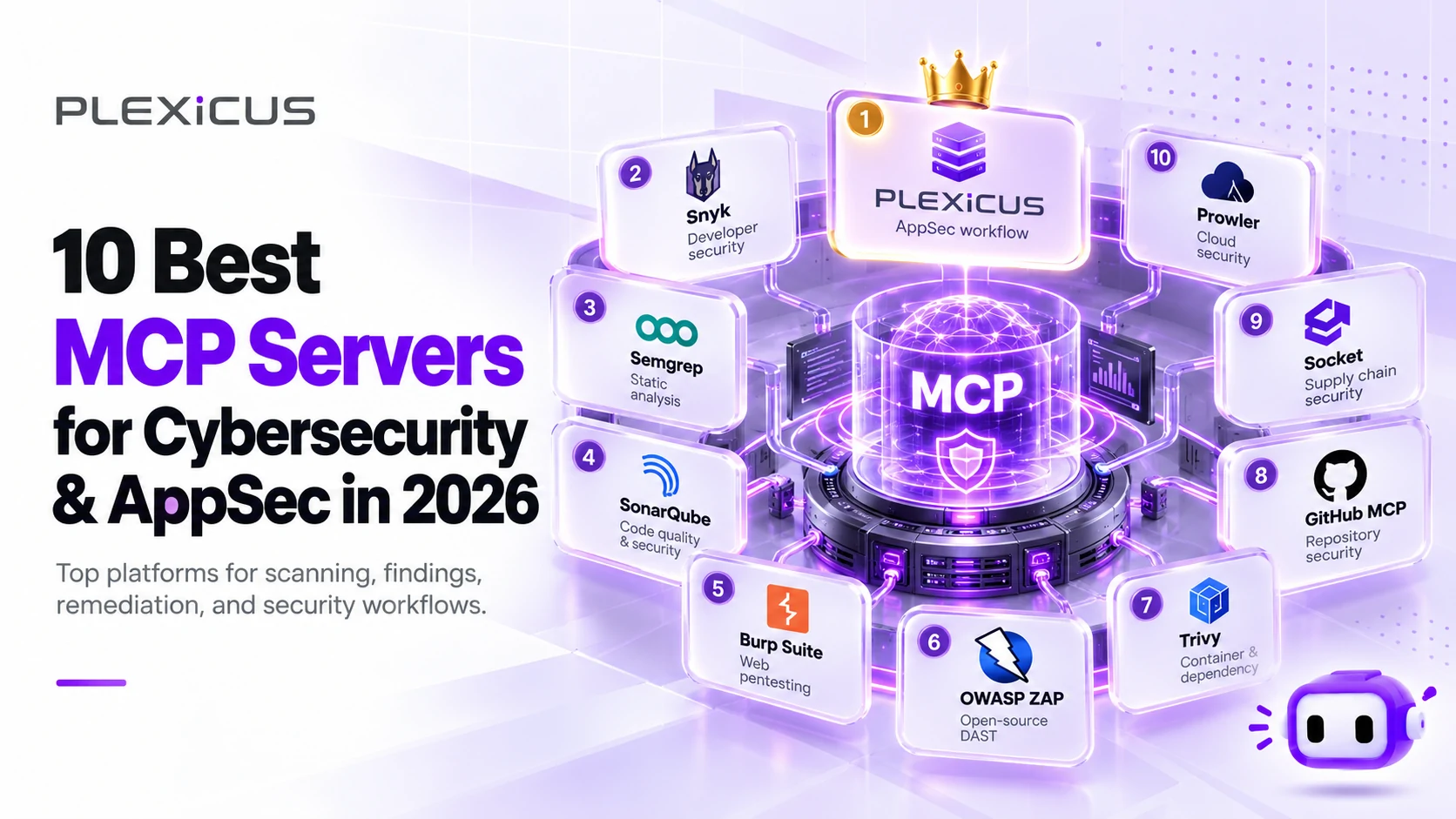
An editorial guide to security MCP integrations for AI-assisted development: repository findings, scanning, web testing, supply chain analysis, and cloud security.
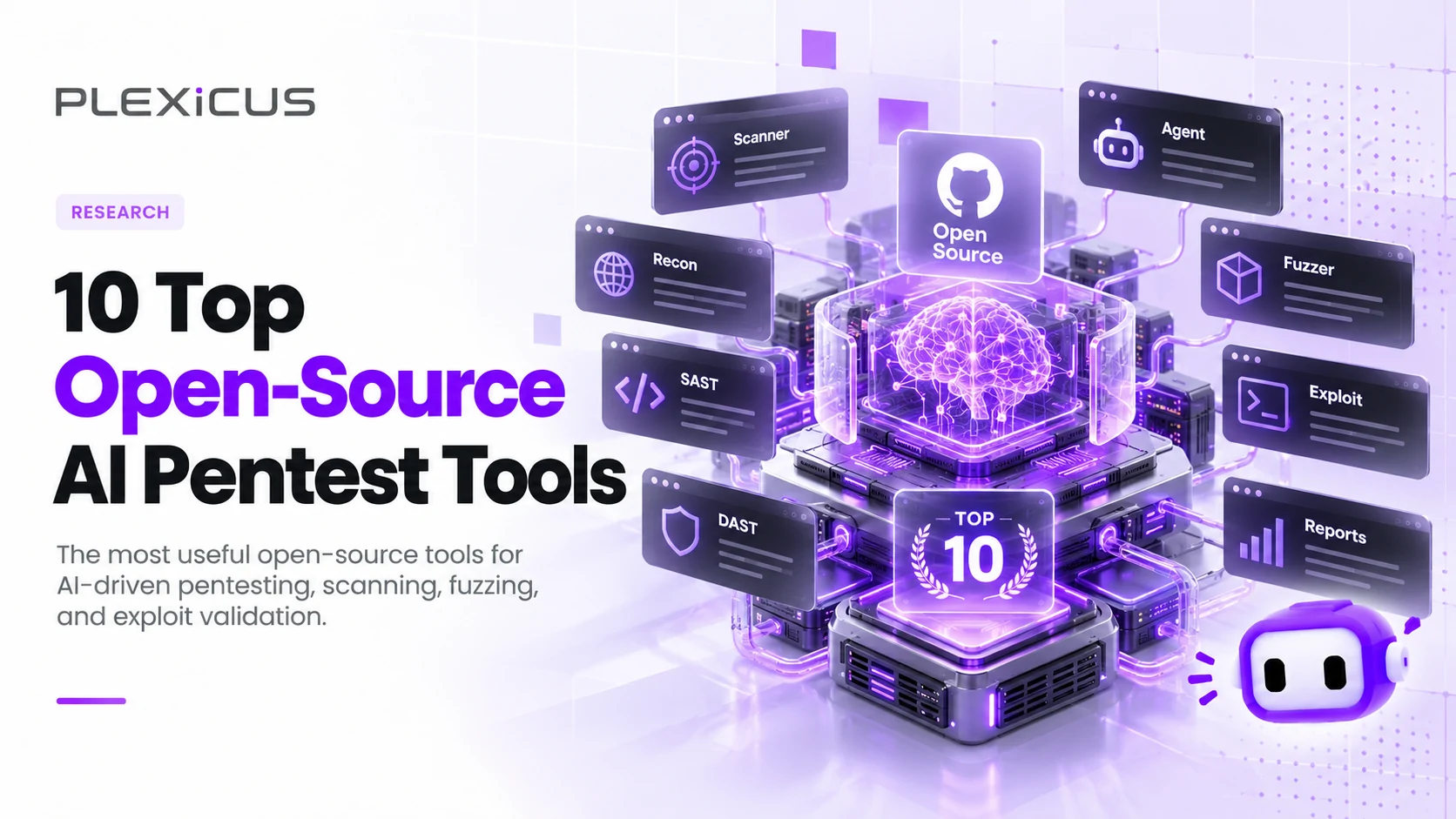
Open-source AI pentesting has split into distinct categories: autonomous application pentesters, multi-agent orchestration platforms, verification-first agents, and MCP tool layers. We reviewed 10 actively developed projects and explained what each one is genuinely good at.
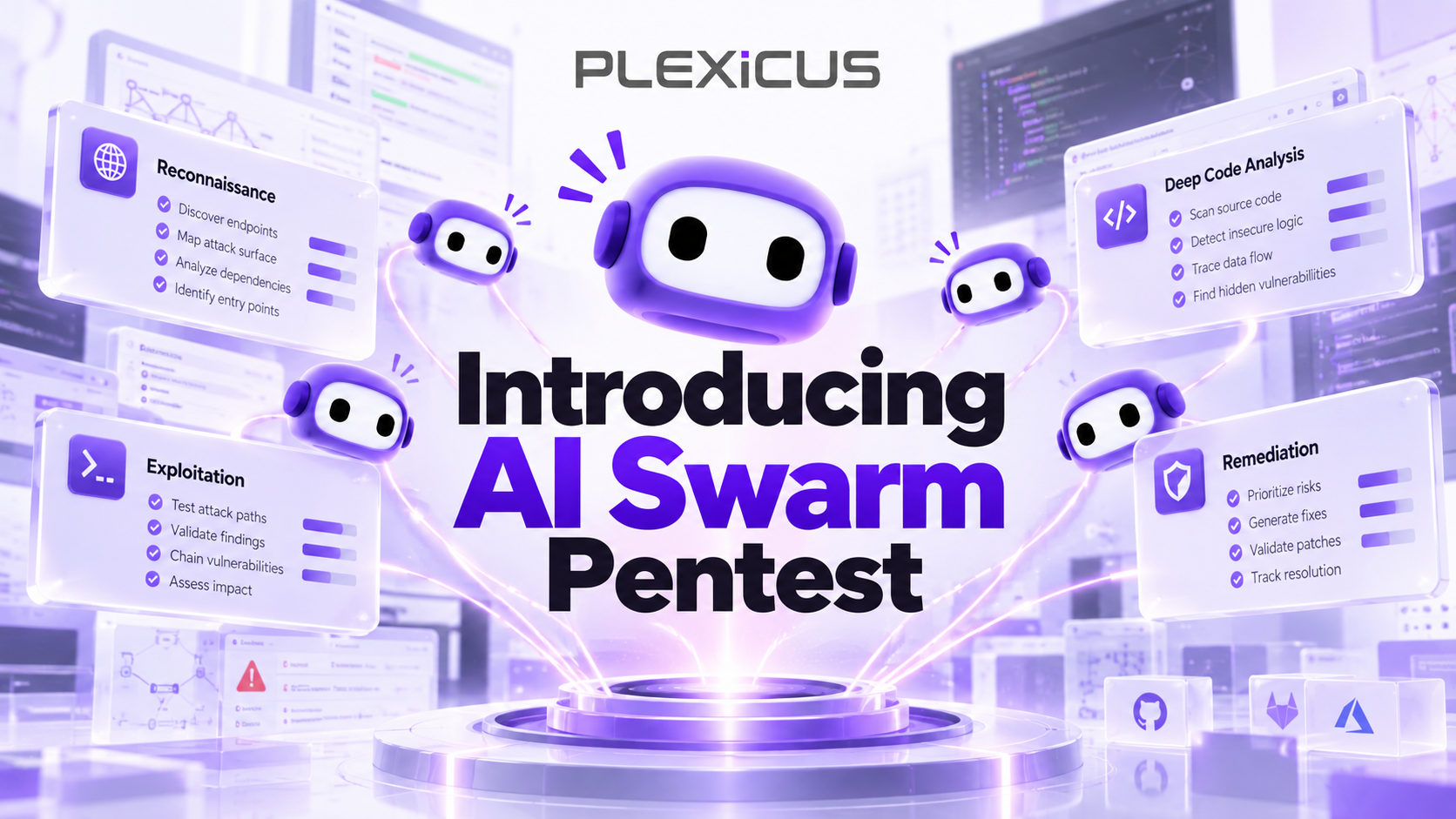
How specialized attack agents share context, challenge hypotheses, and independently verify attack paths inside the Plexicus Proof-Driven AppSec workflow.
A complete guide to application security in 2026, from secure design and software supply chains to testing, exploit validation, remediation, and Proof-Driven AppSec.
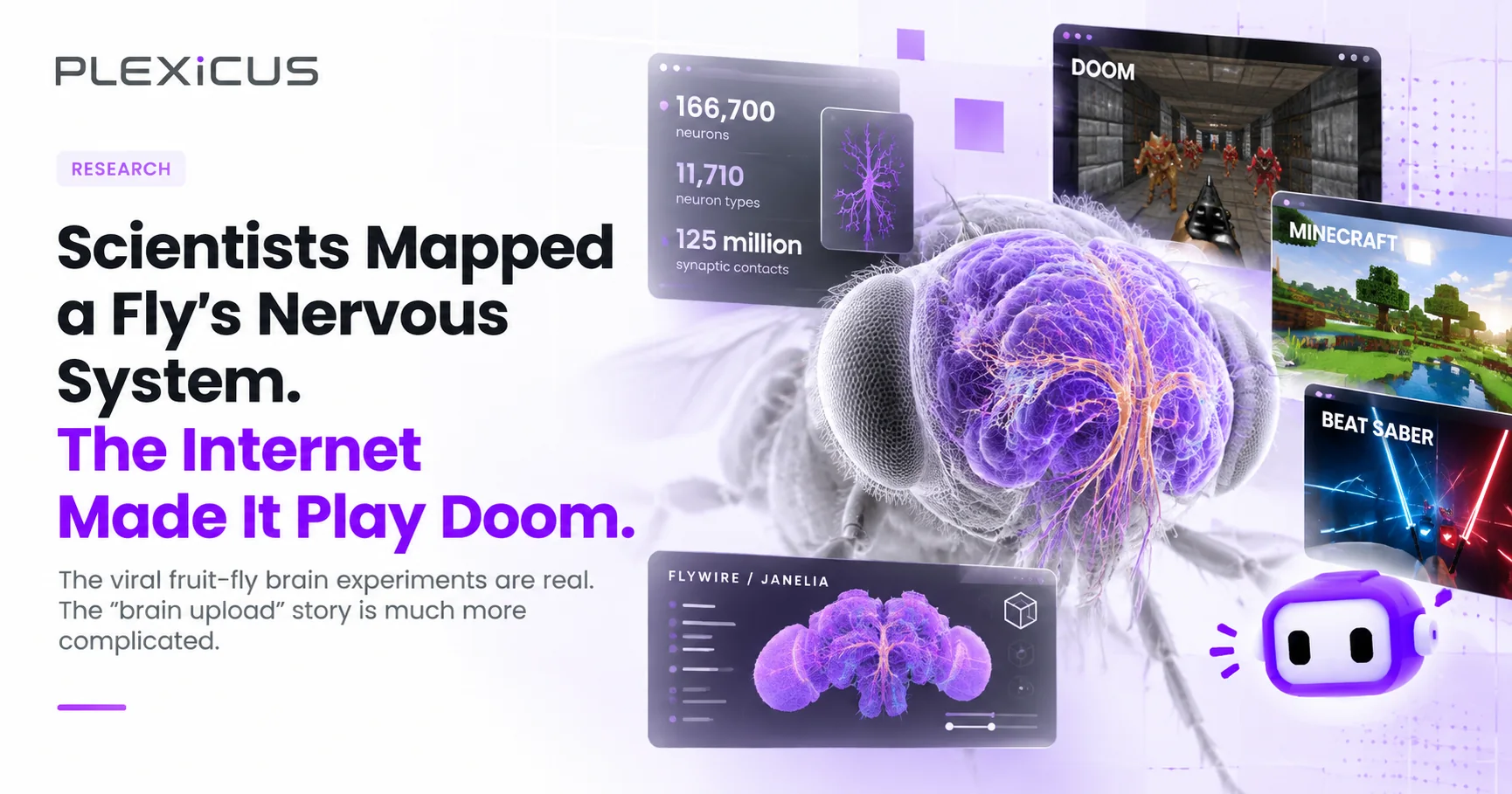
A fruit-fly connectome offers a vivid test of a security principle: a demo is not proof until controls show what the advertised system contributes.
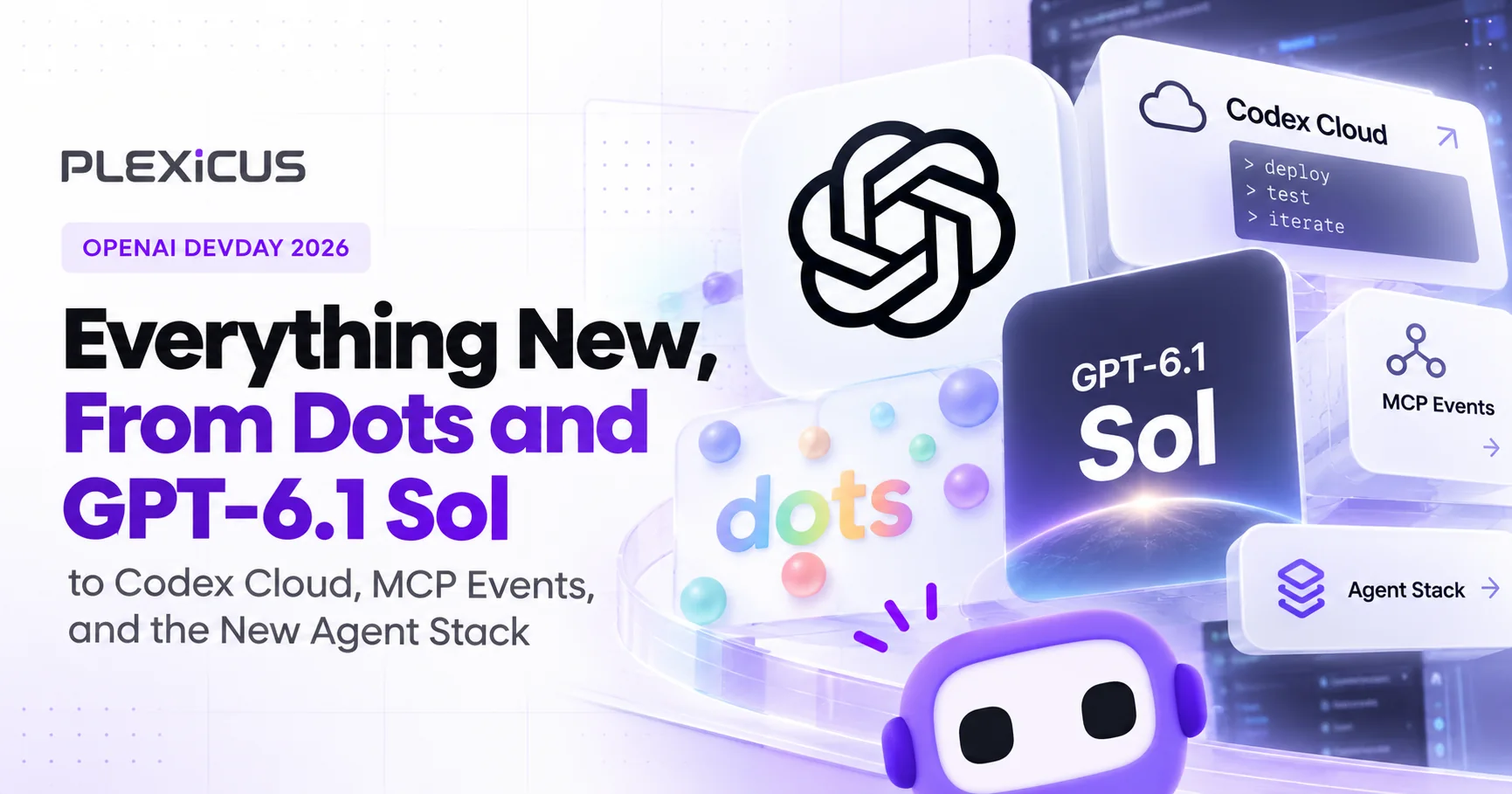
DevDay 2026 connected persistent agents, cloud coding, plugins, events, and shared work. Here is what shipped, what is still coming, and where AppSec boundaries lie.
Opus 5.5 motion-graphics demos reveal an agentic loop: plan, write code, run it, inspect, revise. Claude cybersecurity now depends on verification keeping pace.
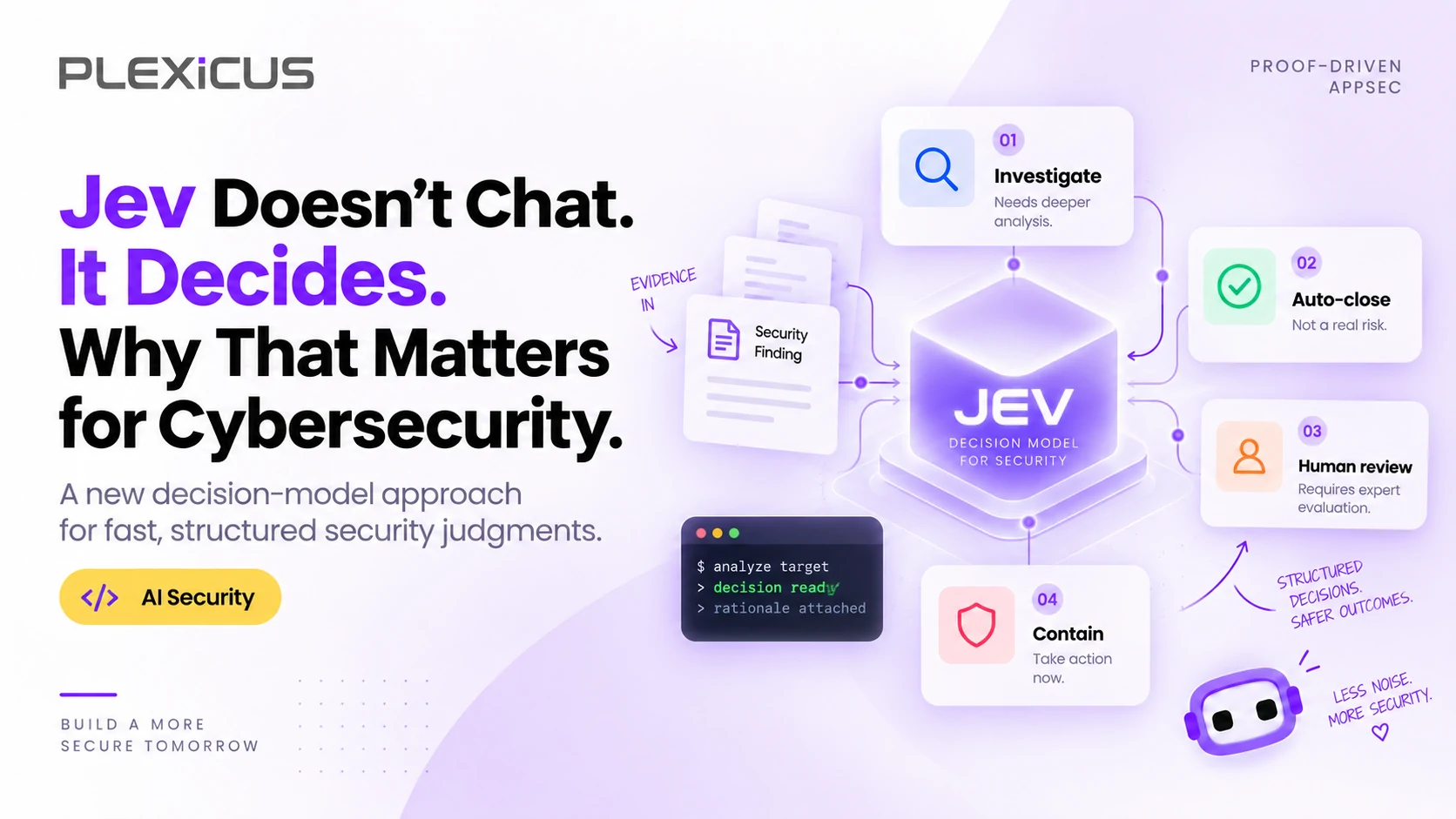
Jev AI returns typed decisions instead of prose. That could change where semantic judgment fits in security workflows, if teams keep policy, fallbacks, verification, and human review.
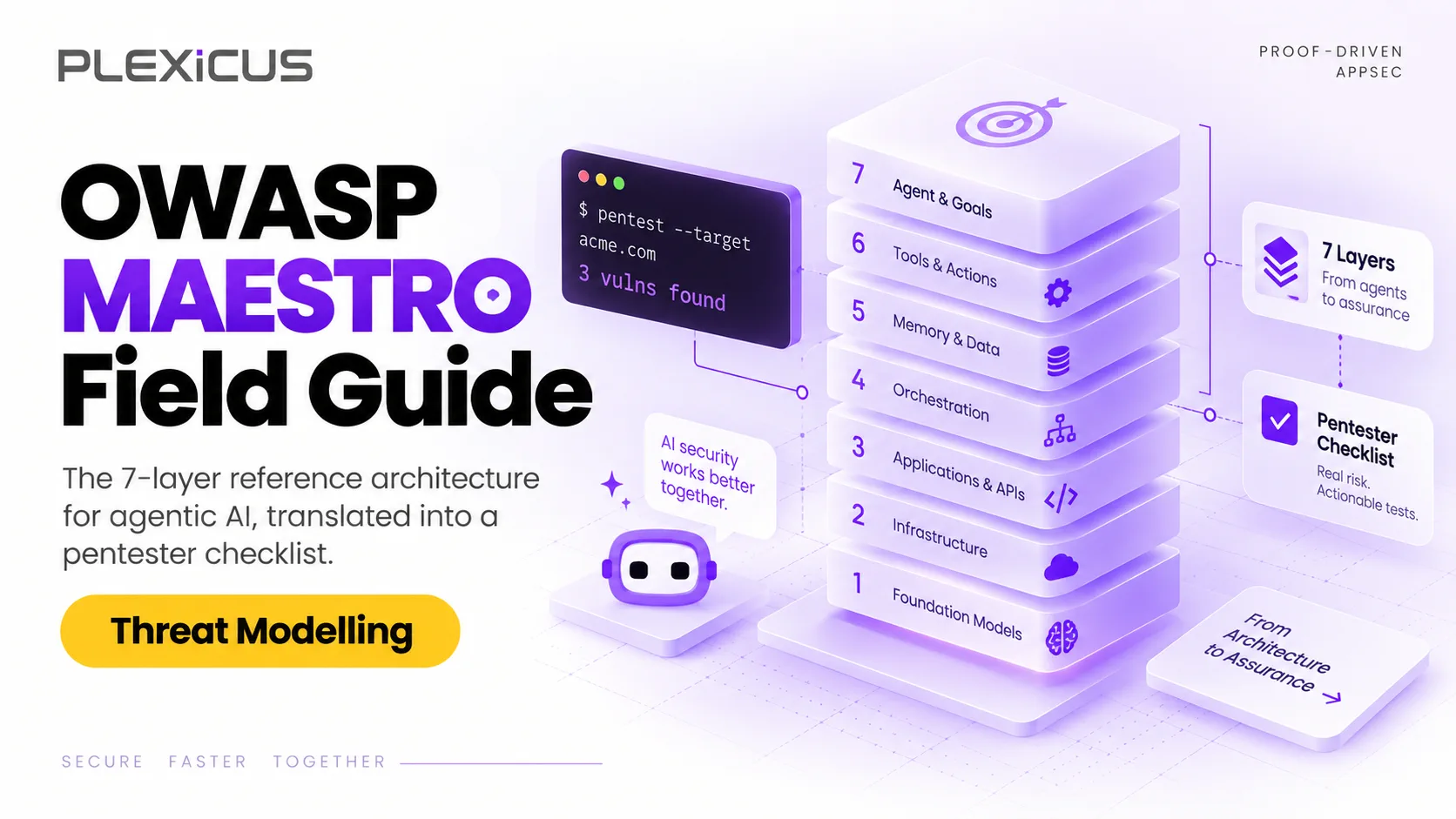
MAESTRO is the Cloud Security Alliance's 7-layer framework for agentic AI threat modeling, applied by the OWASP GenAI Security Project. This guide turns each layer into a pentest checklist.
AI penetration testing in 2026 splits into three lanes: autonomous pentest agents, BAS platforms and AI-assisted PTaaS. We compared 15 tools on signed-scope evidence, replay and pricing.
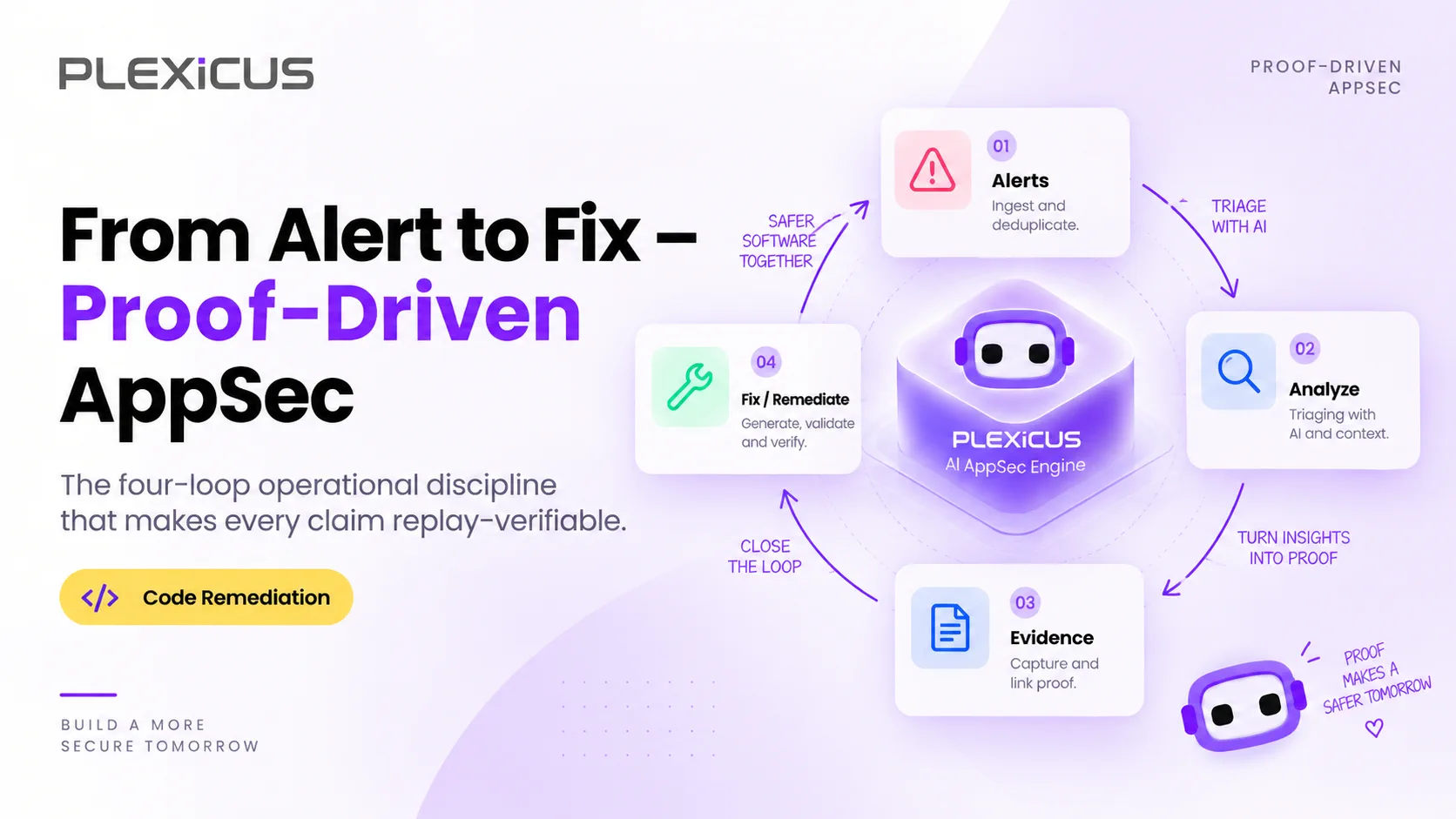
Proof-Driven AppSec is a vulnerability remediation process that closes the loop from alert to merged fix once, with replayable evidence at every step: detect, verify, fix, audit.
AI can remove repetitive AppSec work without removing accountability. Learn how to decide what to automate, what to augment, and when a security decision should be escalated to a person.
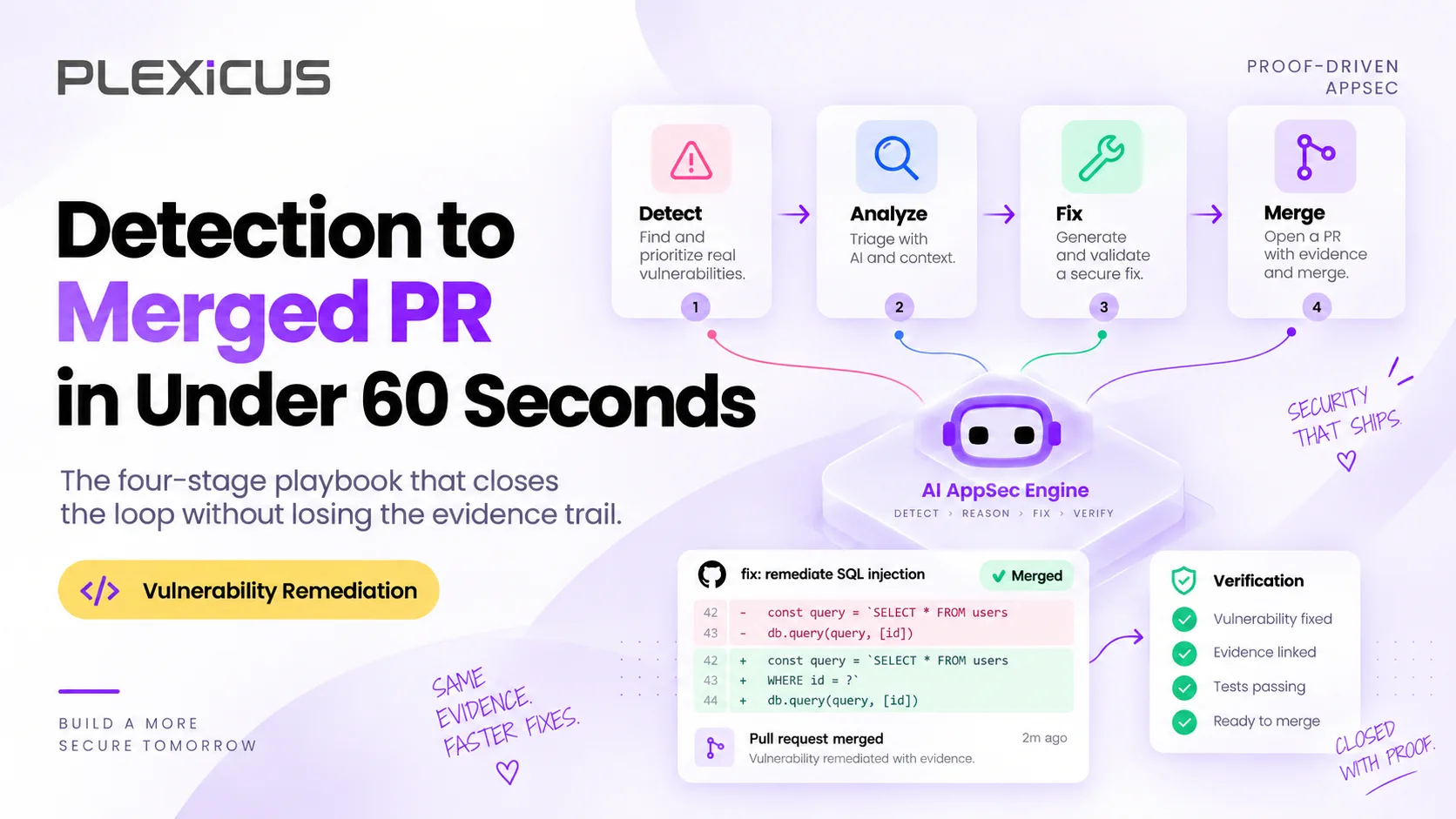
A four-step automated vulnerability remediation playbook that turns a verified finding into a tested, reviewer-ready PR in under 60 seconds, with the evidence attached.
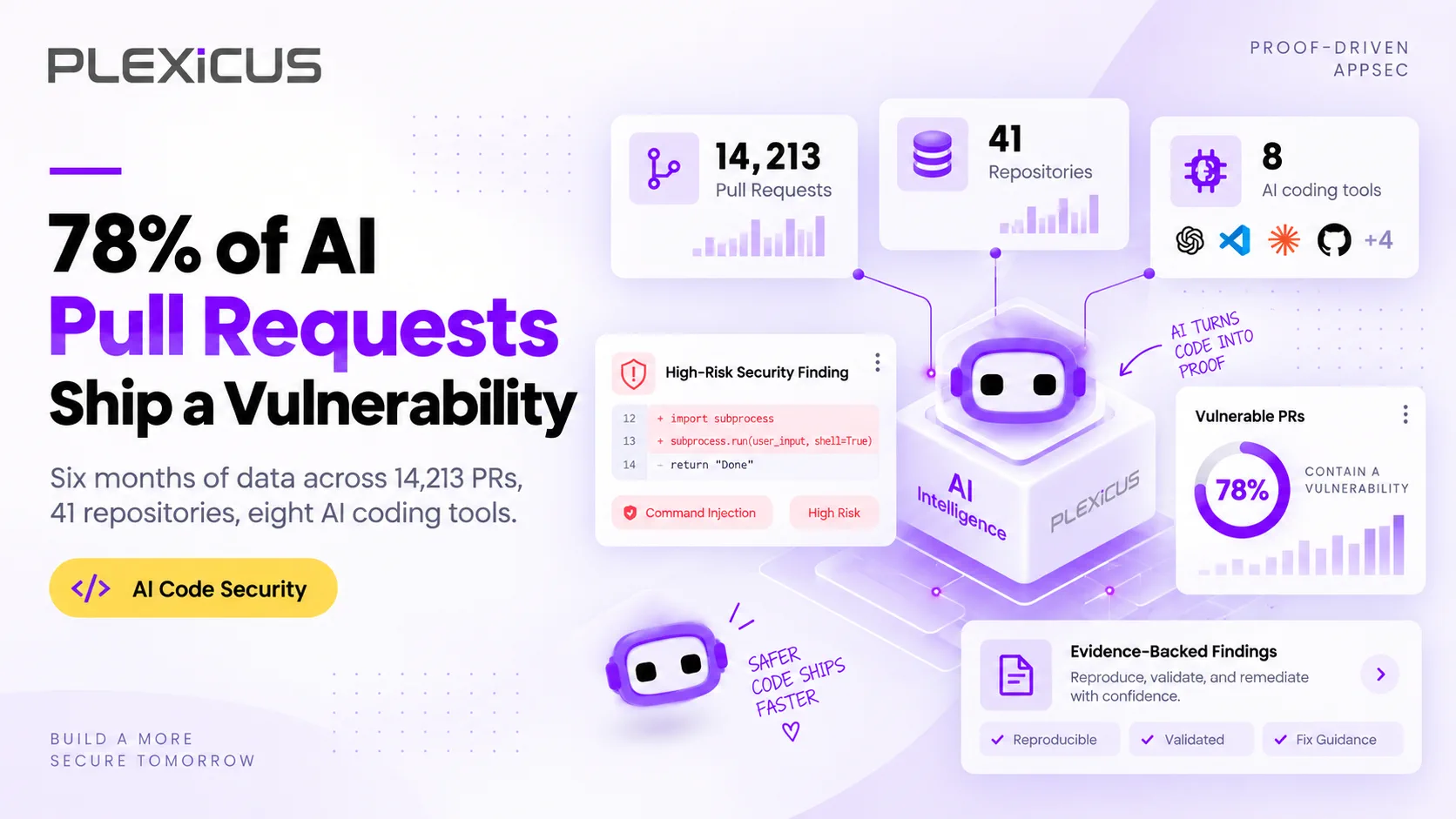
78% of 14,213 AI-assisted pull requests we scanned contained a vulnerability that survived human review. Here is how we measured it, the flaw classes, and what fixes it.
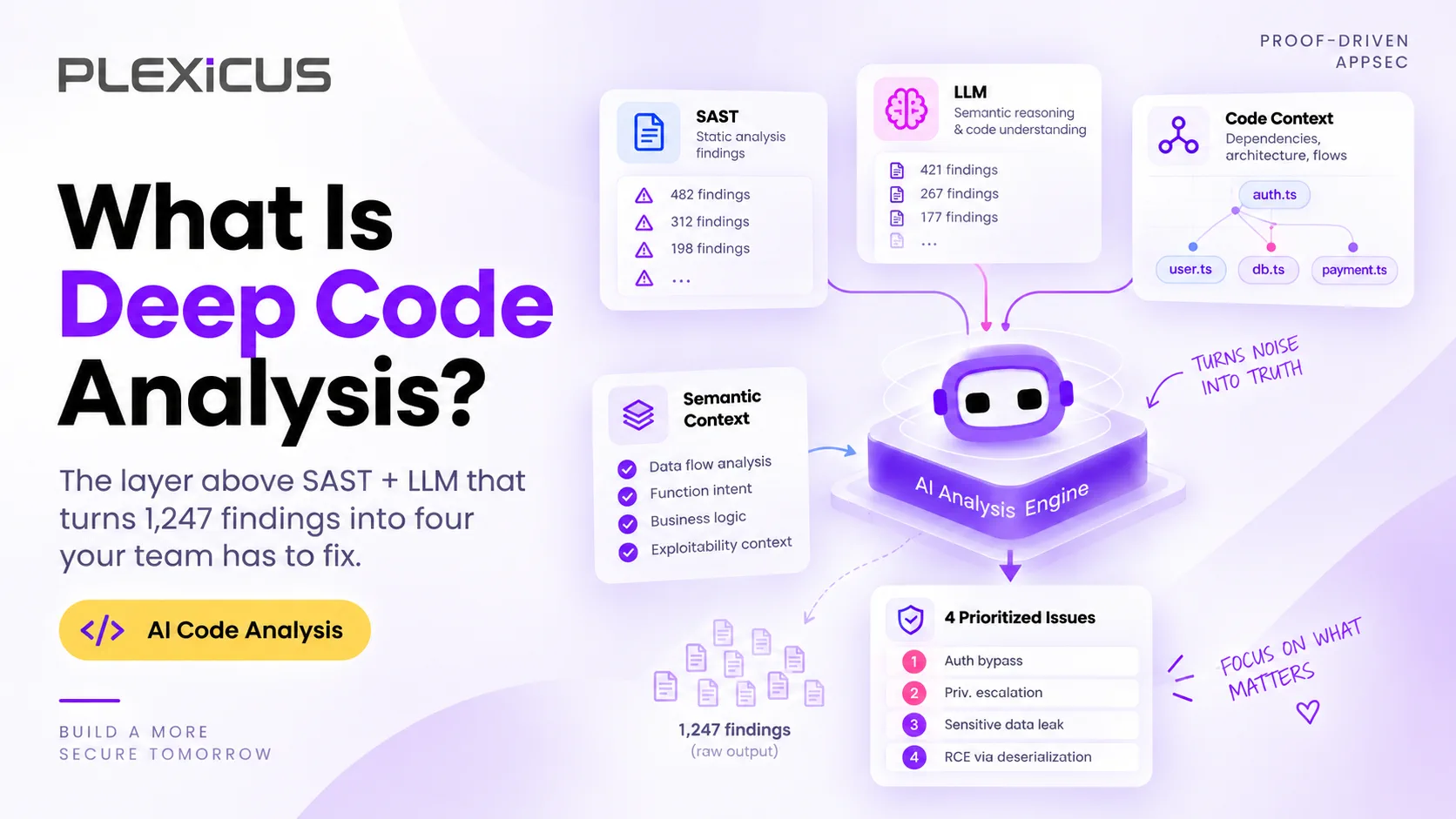
SAST false positives bury real bugs, and an LLM wrapper does not fix that. Deep Code Analysis uses reachability analysis to prove which findings are real, reachable, and worth fixing.
AIコーディングツールは開発者の生産性を向上させていますが、開発の高速化には、より優れた可視性、強力なレビューワークフロー、信頼性の高い修正プロセスが必要です。これは、Codex、Claude Code、Cursor、Windsurf、その他のAIコーディングエージェントを導入するチーム向けの実践的なガバナンスガイドです。
検出だけではAIスピードの開発に対応できません。AIネイティブ修復は次の層です。SDLCのあらゆる段階でAI生成コードの脆弱性を修正、検証、追跡するチームを支援します。
AIコーディングツールは、ほぼすべての新規コードの半分を記述しています。そして、そのコードの45%には少なくとも1つの脆弱性が含まれています。Vibe Codingセキュリティは、AIによって作成されたソフトウェアを保護し、リスクを本番環境に到達する前に検出、優先順位付け、修復する実践です。
「Plexicus Communityは、開発者向けの永遠に無料のアプリケーションセキュリティプラットフォームです。クレジットカード不要で、完全なSAST、SCA、DAST、秘密情報、IaCスキャンに加え、AIによる脆弱性修正を提供します。」
セキュリティツールは騒がしい障壁としての評判があります。開発者がコードをプッシュし、CI/CDパイプラインが500ページのPDFレポートを添付して失敗すると、彼らの自然な反応は問題を修正することではありません。それは無視するか、コードを強制的にマージすることです。
脆弱性を見つけることはもう主要な課題ではありません。現在の最大の問題は、開発者が対処する時間がない大量のセキュリティ負債です。
このガイドでは、手動でのパッチ適用を超えて、AI駆動の自動化を使用してSQLi脆弱性を検出、優先順位付け、修正するワークフローを構築する方法を学びます。
AI駆動のセキュリティを使用する組織は、侵害ライフサイクルを80日短縮し、1件あたり190万ドルを節約しました。これは34%の削減であり、防御におけるAIの重要性が増していることを示しています。
2026年に向けて、多くの技術チームは「異常検出」だけでは生成されるコードの膨大な量を処理するには不十分であると感じています
`trivy image`を実行することはDevSecOpsではなく、ノイズ生成です。真のセキュリティエンジニアリングは信号対ノイズ比に関するものです。このガイドは、ビジネスを止めずに脆弱性を止めるための17の業界標準ツールのプロダクショングレードの設定を提供し、プリコミット、CIゲートキーパー、ランタイムスキャンの3つのフェーズに整理されています。
DevSecOpsは現代のソフトウェア提供における標準となりました。チームはもはや開発後にセキュリティにコードを引き渡すことはありません。2026年までに、セキュリティはパイプラインのすべてのステップにおいて共有され、自動化された一部となります。このガイドでは、2026年に試すべき主要なDevSecOpsツールをまとめ、各ツールの機能、長所と短所、そしてそれが置き換える従来のソリューションを正確に説明します。
Sysdigは、その強力なカーネルイベントカバレッジで知られています。Falcoのオープンソース基盤に基づいて構築されており、LinuxカーネルやKubernetesポッドへの詳細な可視性を必要とするSOCチームに人気があります。
SentinelOne Singularity Cloudは、自律型EDR/CWPP分野の先駆者の一つでした。AI搭載のエージェントは高速でオフライン保護を提供し、多くの組織がランサムウェア攻撃を回避するのに役立ちました。
2026年では、主な課題は単にバグを見つけることではありません。本当の問題は、攻撃者がそれをどれだけ早く悪用するかです。セキュリティチームはかつて脆弱性を修正するのに数週間の猶予がありましたが、今ではその時間はほとんどなくなっています。
合気道セキュリティは、不要なアラートを削減することで人気を博しました。到達可能性に焦点を当てることで、開発者が古いスキャナーが作成した「脆弱性スパム」を回避するのに役立ちました。
2026年までに、クラウドセキュリティの優先事項は変化しました。可視性はもはや主要な売りではなく、Wiz.ioが2020年代初頭に基準を設定しました。現在の主な課題は、変化のペースに追いつくことです。
急成長中のテック企業のセキュリティオペレーションセンターでの賑やかな金曜日の午後を想像してください。チームはすでにアラートに忙殺されており、次々と通知が届き、画面には即時対応が必要な「重大」な問題が点滅しています。彼らは様々なプロバイダーにまたがる1,000以上のクラウドアカウントを持ち、それぞれがアラートの津波に寄与しています。しかし、これらのアラートの多くはインターネットに露出したリソースに関連しておらず、チームはその規模と明らかな緊急性に圧倒され、苛立ちを感じています。クラウドセキュリティは複雑です。
セキュリティツールのインストールは簡単な部分です。難しいのは「2日目」から始まります。そのツールが5,000件の新しい脆弱性を報告したときです。このガイドは脆弱性管理に焦点を当てています:重複したアラートをフィルタリングし、誤検知を管理し、実際に成功を測る指標を追跡する方法を学びます。「バグを見つける」から「リスクを修正する」へと移行し、チームを圧倒しない方法を学びましょう。
セキュリティツールを選ぶ際には、開発者体験(DevEx)が重要です。セキュリティは開発者の仕事を容易にするべきであり、困難にしてはいけません。開発者がコーディング環境を離れたり、別のダッシュボードを使用して問題を見つける必要がある場合、それは彼らの作業を遅らせ、ツールの使用を避ける原因となります。
この段階的なアプローチは、セキュリティツールをスムーズに展開し、ビルドを維持するのに役立ちます。出荷を保護する一連の小さなステップと考え、より信頼性が高く安全な開発プロセスを確保します。
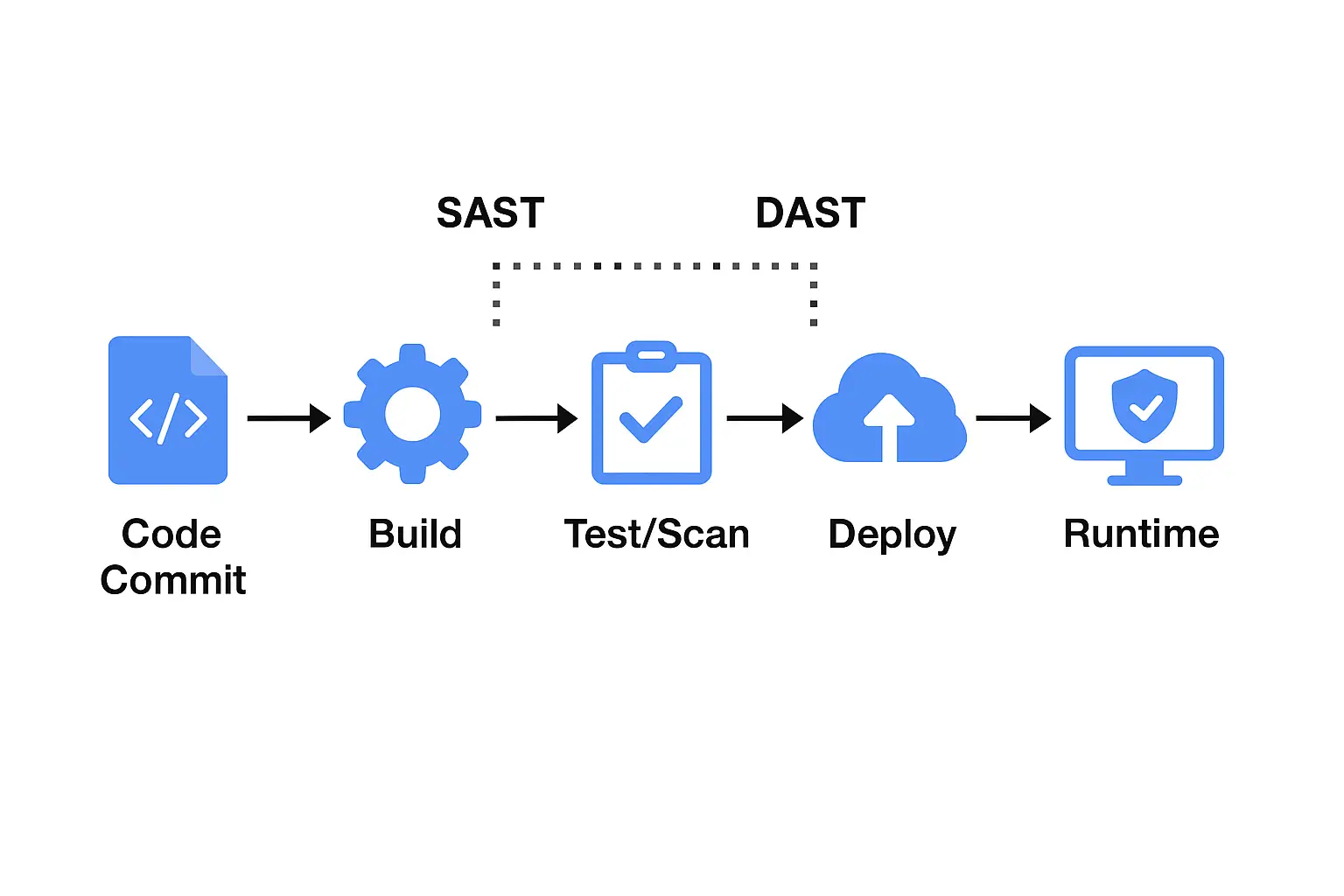
SASTとDASTは、アプリケーションを攻撃から守るためのセキュリティテスト手法です。それぞれがアプリケーションセキュリティにどのように役立つかを理解するために、これらの違いとワークフローにおける位置付けを見てみましょう。
Plexicus、Cycode、Wiz、Apiiroなどの主要なASPMツールを比較して、AppSecテストと脆弱性管理を自動化
脆弱性を検出し、API攻撃を阻止し、高度なスキャンとテストでアプリケーションを保護するためのトップAPIセキュリティツールを発見してください。
現代のアプリケーションは、サードパーティやオープンソースのライブラリに大きく依存しています。これにより開発が迅速化されますが、攻撃のリスクも増加します。各依存関係は、未修正のセキュリティ欠陥、リスクのあるライセンス、または古いパッケージなどの問題を引き起こす可能性があります。ソフトウェア構成分析(SCA)ツールはこれらの問題に対処するのに役立ちます。
市場にはオープンソースからエンタープライズグレードまで、数十のSASTツールがあります。課題は、どのSASTツールがあなたのチームに最適かです。
ウェブアプリケーションセキュリティは、機密データを狙ったサイバー攻撃からアプリを保護し、操作を妨害することが不可欠です。このガイドでは、ウェブアプリセキュリティの重要性、一般的な脆弱性、ベストプラクティス、テスト方法をカバーし、アプリケーションを安全にし、コンプライアンスを確保し、ユーザーの信頼を維持する方法を紹介します。
悪夢のようなセキュリティ侵害が多くのヨーロッパ企業にとって現実となっています。侵害リストから外れるために知っておくべき15の変革的なDevSecOpsトレンドを学びましょう。
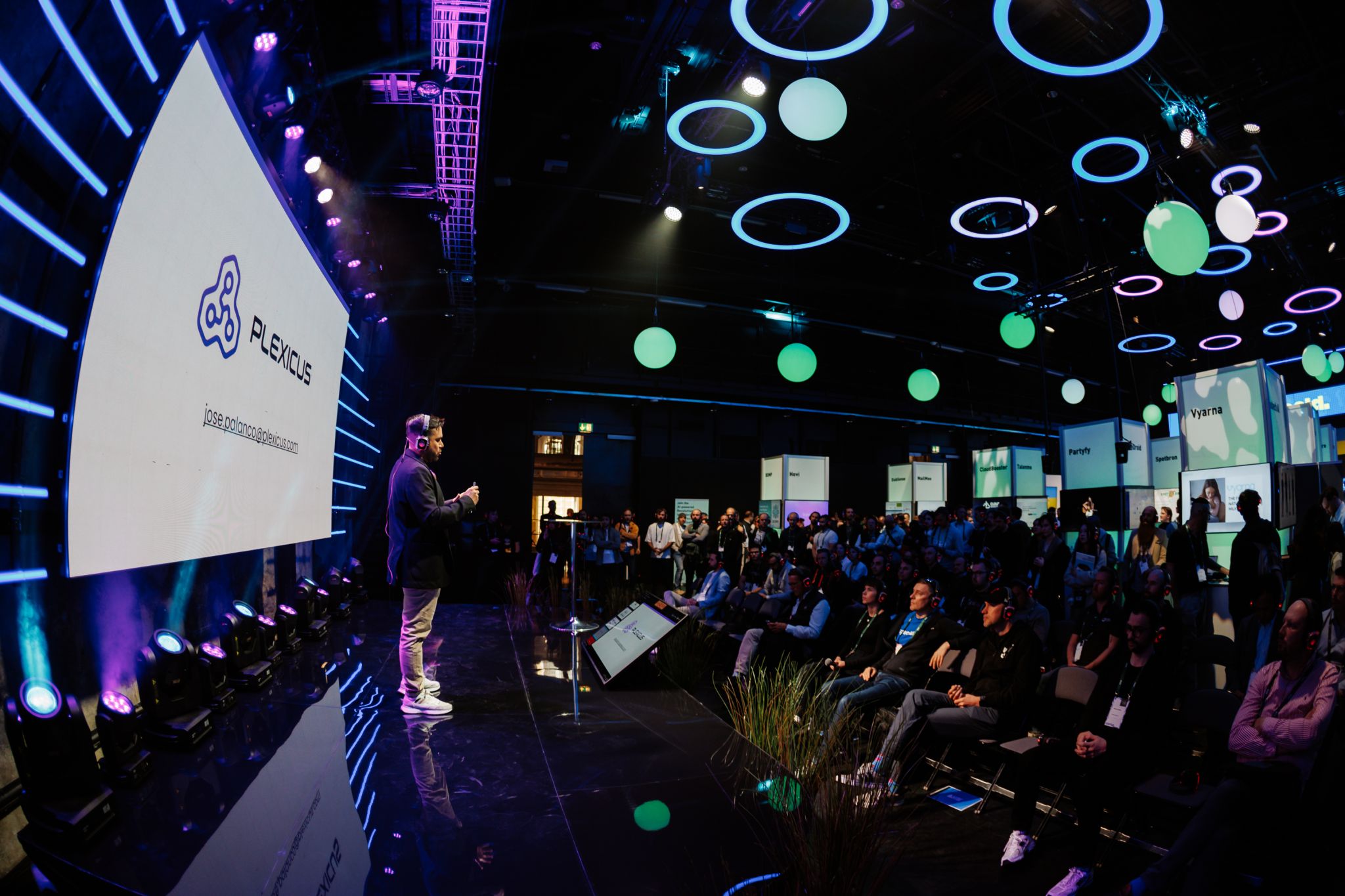
PlexicusがStartup Wise Guys 2025年春バッチアクセラレータープログラムを卒業しました。
今日、ソフトウェアを構築または運用している場合、おそらくマイクロサービス、サーバーレス関数、コンテナ、サードパーティパッケージ、およびコンプライアンスチェックボックスの雪崩を処理していることでしょう。それぞれの動く部分が独自の発見、ダッシュボード、そして赤い警告を生み出します。やがて、リスクの可視性は午前2時のサンフランシスコの霧の中を運転するような感覚になります。危険がそこにあることはわかっているが、はっきりとは見えないのです。
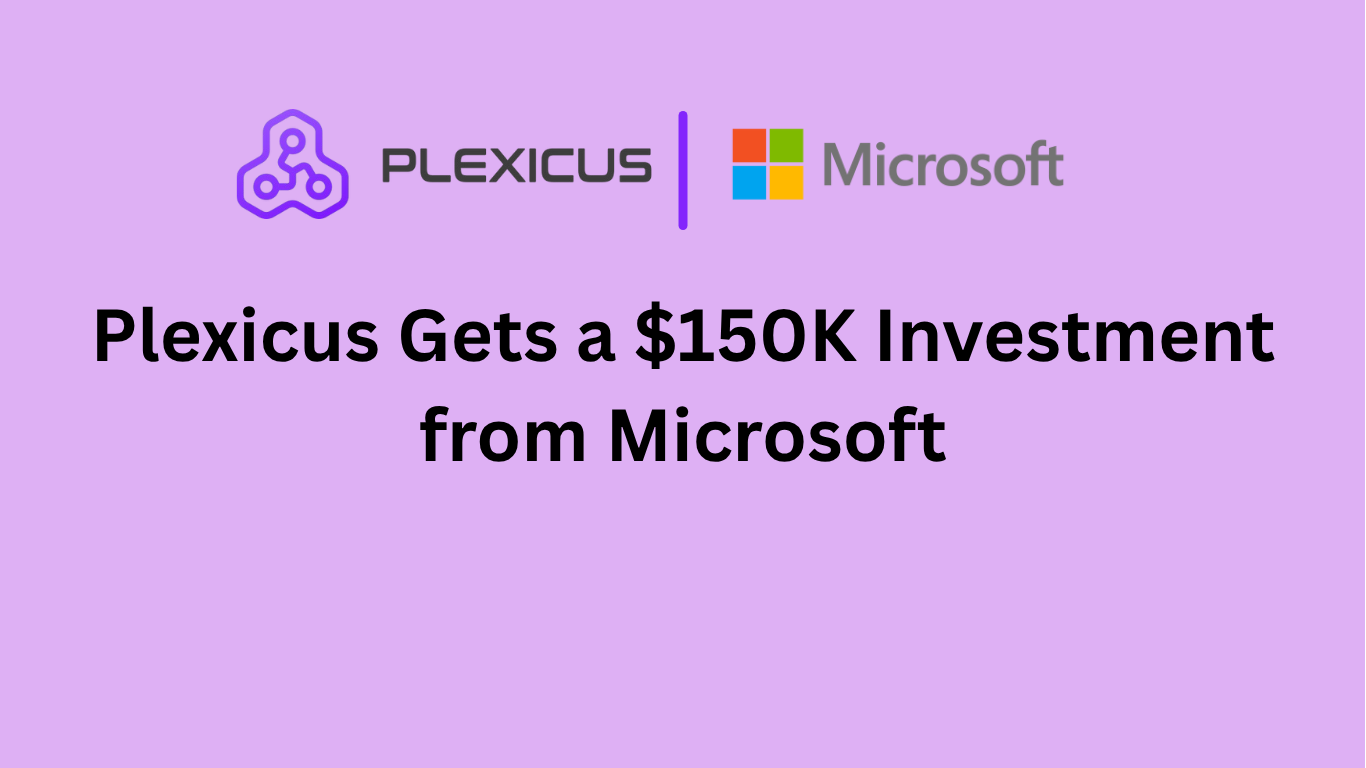
Plexicusは、クラウドインフラストラクチャを拡大するためにMicrosoftから15万ドルの投資を獲得しました。この資金により、システムの性能、スケーラビリティ、信頼性が向上し、PlexicusはAIを活用した企業向けソリューションでより多くの企業を支援できるようになります。
Plexicusの新しいBlackDuck統合が、リアルタイムの脆弱性検出、自動リスク優先順位付け、シームレスなDevSecOpsワークフローにより、オープンソースのセキュリティをどのように強化するかを発見してください。
Plexicusがリアルタイムの脆弱性修復のためのAI駆動セキュリティプラットフォームを立ち上げました。自律エージェントが脅威を即座に検出、優先順位付け、修正します。
PlexicusとCéfirosの新たな協力により、ラテンアメリカとイベリアの19か国でアプリケーションセキュリティが強化される予定です。このサイバーセキュリティの協力は、サイバー脅威に対抗するために積極的に防御を求める組織に、先進的なアプリケーションセキュリティポスチャーマネジメント(ASPM)ソリューションを提供します。
DORA、ISO 27001、NIST SP 800-53のようなフレームワークは、堅牢なアプリケーションセキュリティポスチャーマネジメントに不可欠であり、組織が基準を満たし、リスクを軽減し、規制コンプライアンスを維持するのに役立ちます。
Explore content by topic and discover articles that interest you
Plexicus is Proof-Driven AppSec: validated findings, contextual understanding, and reviewed remediation — anchored in evidence, scoped with you.